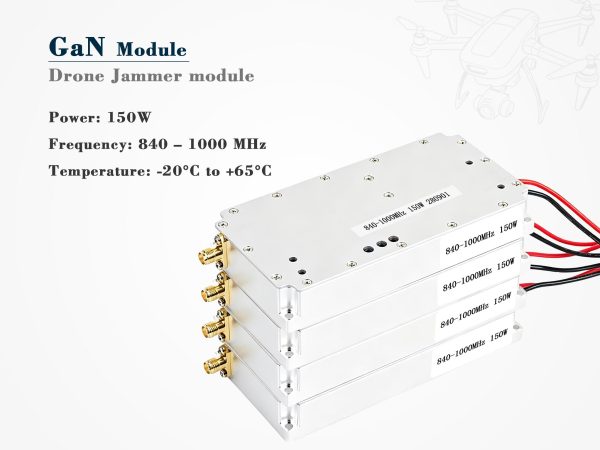
150W 1350‑1450MHz Drone Jammer Module – L‑Band
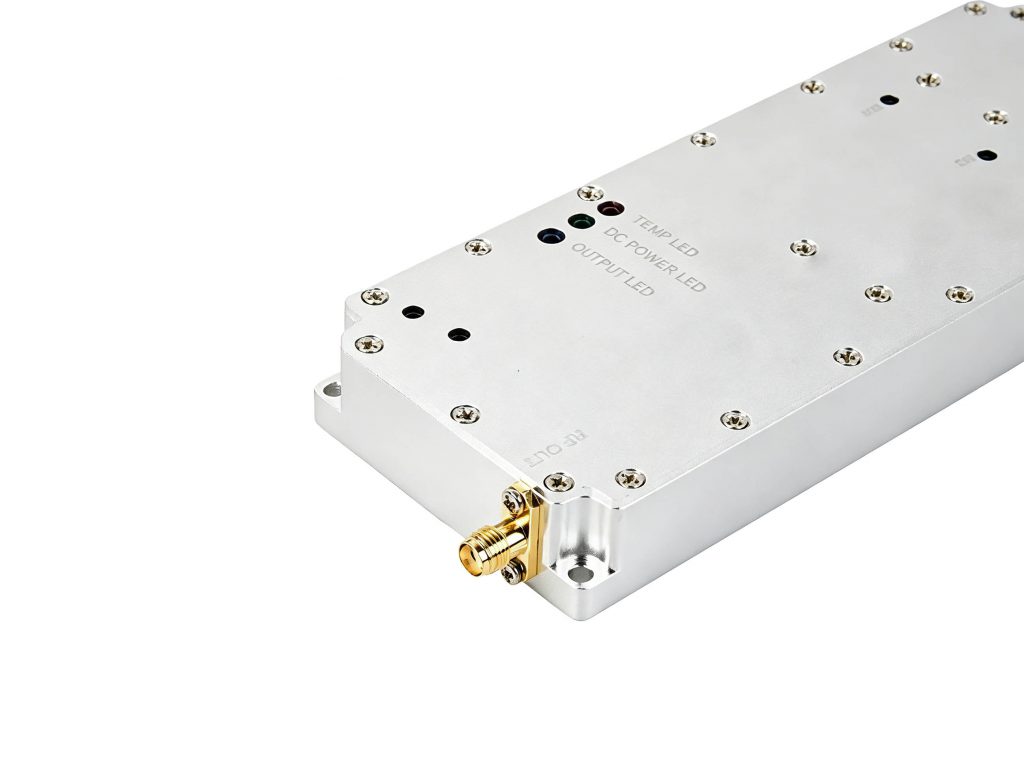
150W drone jammer module for 1350–1450MHz with analog sweep & VSWR protection. DC 24‑29V, 15A, SMA out, 168×84×23mm. For counter‑UAS systems.
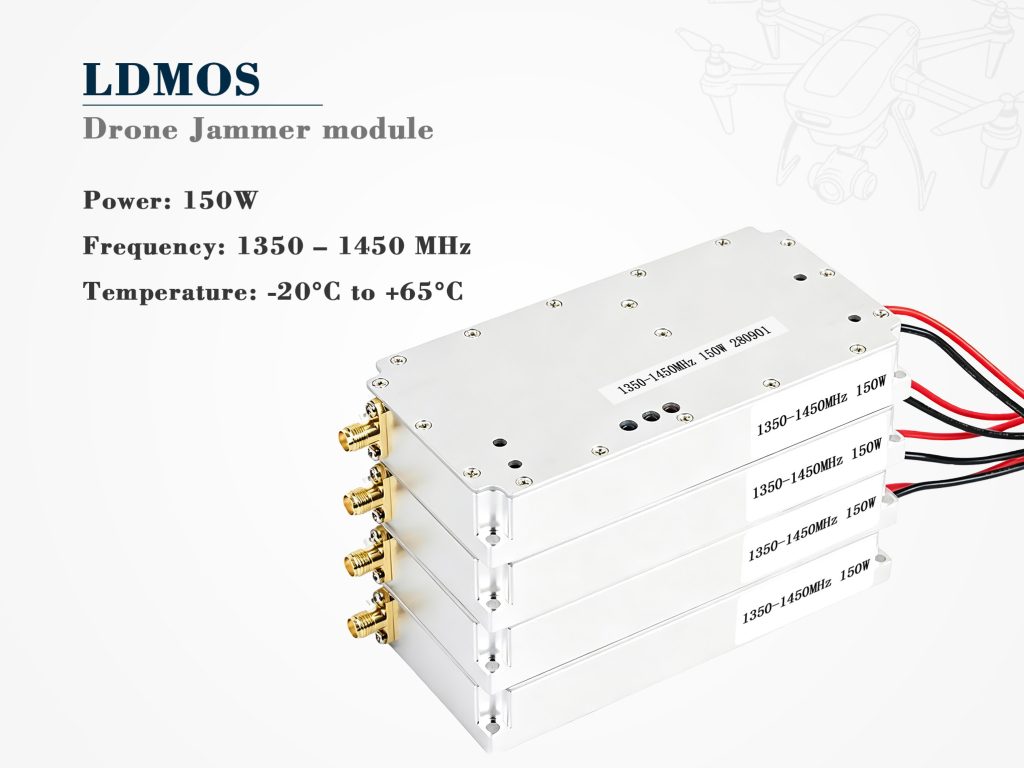
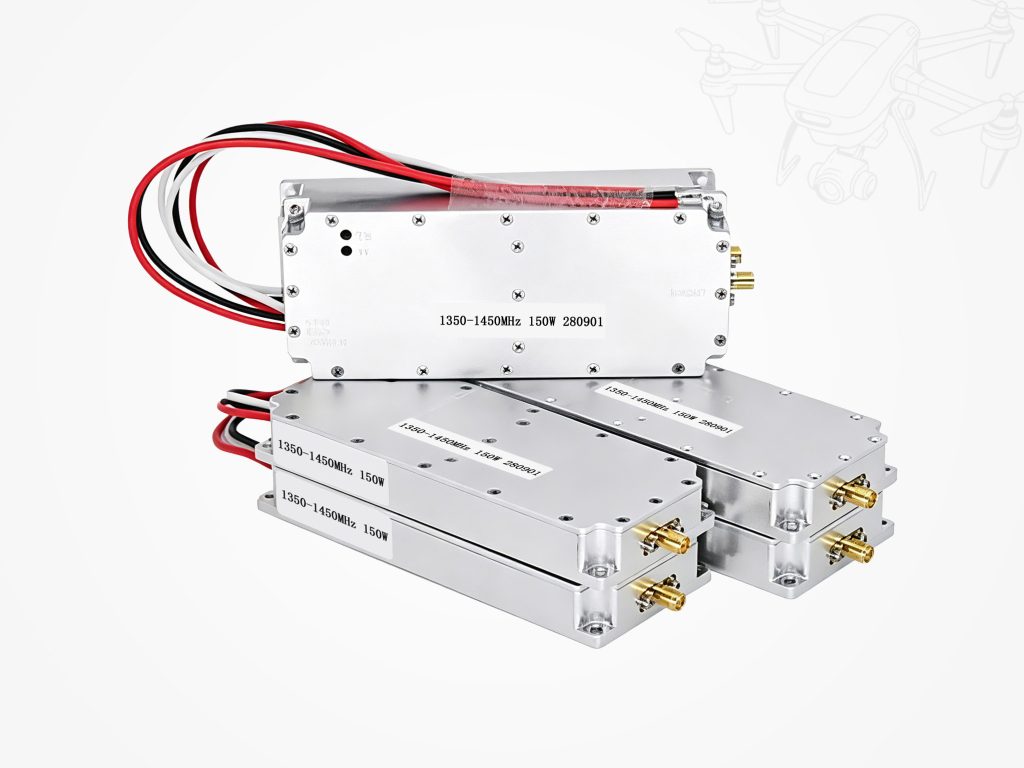
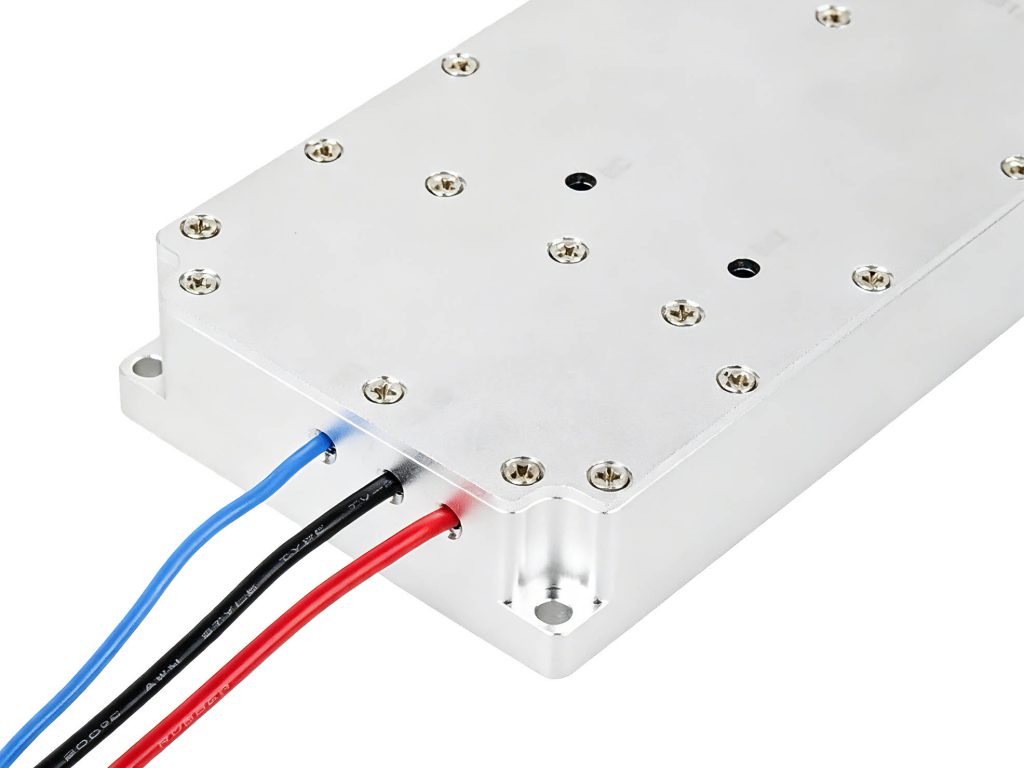
Technical Specifications
| Parameter | Specification | Notes |
| Frequency range | 1350 – 1450 MHz | Full 100 MHz coverage |
| Output power | 150W (typical) | Measured at 50Ω load, 26V supply |
| Supply voltage | DC 24V – 29V | Nominal 26V recommended |
| Current draw | ≤ 15.0A | At maximum output power |
| Modulation source | Built‑in high‑speed analog sweep | VCO‑based, no external generator |
| Analog scan speed | > 50 MHz/ms | Covers band in < 2 ms |
| Input / output impedance | 50Ω (RF output) | Control input is high‑impedance TTL |
| Protection LEDs | Built‑in absorptive VSWR protection; over‑temp & over‑current (internal) | No external LED pins – protection is automatic and self‑resetting |
| Operating temperature | -20°C to +65°C | Ambient, with adequate heatsinking |
| Dimensions (L×W×H) | 168.5 × 84.5 × 23 mm | Excluding connectors and mounting tabs |
| Weight | 0.55 kg | Approximately |
| Base material | Aluminium alloy (6061) | Provides thermal spread and structural strength |
Product Details
The L‑Band Gap in Most Drone Defences
If you look at most counter‑UAS systems on the market, they typically cover 2.4GHz, 5.8GHz, and maybe 900MHz. But there’s a gap – a significant one – right around 1.3‑1.5GHz. This is L‑band territory, and it’s increasingly important in drone operations. Why? Because GPS and GNSS signals live here (the L1 band is at 1575MHz, L2 at 1227MHz, and L5 at 1176MHz), but more importantly, some drones use the 1350‑1450MHz range for command links when they want to avoid the crowded 2.4GHz spectrum and still get decent range.
The 1350‑1450MHz band also happens to be used by certain military UAVs for secure data links, and by some long‑range commercial drones as a backup or primary control channel. If your jammer doesn’t cover this band, you’re not just leaving a gap – you’re leaving a door wide open.
This drone jammer module puts 150W of swept interference right into that gap, covering 1350‑1450MHz with an integrated analog sweep source. No external generator needed – just power and an antenna.
150W – Serious Power for Serious Operators
One‑hundred‑and‑fifty watts is a lot of RF power, especially at L‑band frequencies where propagation characteristics are favourable. With a 10‑12dBi directional antenna, you’re looking at effective jamming ranges well beyond 1.5 kilometres – often pushing 2 kilometres under good conditions. That kind of reach makes this module suitable for fixed site defence, vehicle‑mounted systems, and any scenario where you need to engage drone threats at distance.
The module draws about 15A at 26V, which works out to roughly 390W of DC input. At ≥40% efficiency, you get that 150W of RF output while generating about 230W of waste heat – comparable to our 80W modules in terms of thermal density, but with significantly higher output. That efficiency figure is noteworthy because at 150W, even small percentage gains or losses make a big difference in heat management.
Why 1350‑1450MHz Specifically?
This band sits right between the GPS L2 band (1227MHz) and the lower edge of the L1 band (around 1500MHz). Some drone manufacturers have started using 1350‑1450MHz for control links specifically because it’s far enough from GPS to avoid self‑interference, yet close enough that antennas designed for GPS can be repurposed with minimal modification. It’s also less congested than 2.4GHz, meaning fewer interference sources to compete with – which makes it an attractive option for drone operators who want a cleaner link.
For the counter‑UAS operator, that means you need to cover this band. A 2.4GHz jammer won’t touch it. A 5.8GHz jammer won’t touch it. This module is designed specifically for this gap.
Built‑In VSWR Protection – Standard for High‑Power Units
At 150W, the stakes are higher. If something goes wrong with your antenna – a loose connection, a damaged element, or a simple mismatch – the reflected power can do serious damage in a hurry. That’s why this module includes built‑in absorptive VSWR protection as a standard feature. The internal isolator absorbs reflected energy and dissipates it safely, protecting the output stage from catastrophic failure.
The specified output VSWR is ≤2.0, which gives you reasonable tolerance for antenna mismatches. But even if the load swings beyond that, the protection circuitry has you covered. It’s automatic, it’s internal, and it doesn’t require any external monitoring or control.
Control – Consistent and Simple
We’ve kept the control interface consistent across our entire module line: a +5V or floating input turns the module on, and grounding it turns it off. You can drive it from a GPIO, a toggle switch, or a relay. No serial commands, no configuration, no complexity.
The RF output is a standard SMA female connector, compatible with any 50Ω antenna. Since the drone jammer module has its own internal sweep source, there’s no need to feed an external RF signal – just provide power and an antenna.
Power Requirements
Feed this drone jammer module DC between 24V and 29V, with a supply capable of delivering at least 18A continuous to give yourself proper headroom. A 6‑cell Li‑ion pack (25.2V nominal), a 24V industrial power supply, or a suitably sized lead‑acid battery bank will all work. At 15A, wiring needs to be appropriately gauged – we recommend 12 AWG or equivalent for the power leads to minimise voltage drop.
Thermal Management – Expect Serious Heat
With 230W of waste heat at full power, this module needs proper cooling. Without a heatsink, you’re looking at maybe 5‑8 seconds of operation before the internal over‑temperature protection shuts you down. With a substantial passive heatsink (200×100×50mm with fins), you can run a 30% duty cycle – 30 seconds on, 60 seconds off. With a fan‑cooled heatsink, continuous operation is achievable as long as you keep the baseplate temperature below 65°C.
The module includes internal over‑temp and over‑current protection, both of which are automatic and self‑resetting. There are no external LED indicators – the module simply shuts off if it detects a fault and restarts once conditions return to normal.
Size and Build
The drone jammer module measures 168.5 × 84.5 × 23mm and weighs 0.55kg – the same form factor as our 80W L‑band modules, but delivering nearly double the power. The aluminium baseplate (6061 alloy) provides structural support and thermal spreading, and mounting holes let you secure it to a chassis or heatsink.
The Sweep – Fast Enough for Any Hop Sequence
The internal analog VCO sweeps the entire 1350‑1450MHz band at speeds exceeding 50MHz per millisecond. That means the full 100MHz bandwidth is covered in under 2 milliseconds. Any frequency‑hopping drone operating in this band will find every channel disrupted within a single sweep cycle – there simply isn’t enough time to hop away.
Who Should Consider This Drone Jammer Module?
This drone jammer module is for operators who need to cover the L‑band gap that most jamming systems ignore. It’s particularly relevant for military and government applications where drones often use non‑standard frequencies to evade detection. It’s also valuable for R&D labs testing drone systems that operate in this band.
If you’re building a multi‑band jamming system, this module pairs well with our 2.4GHz and 5.8GHz offerings, as well as the 400‑470MHz UHF module. Together, they cover the most common drone frequencies from 400MHz all the way to 5.9GHz, with no gaps.
Frequently Asked Questions
Case Studies
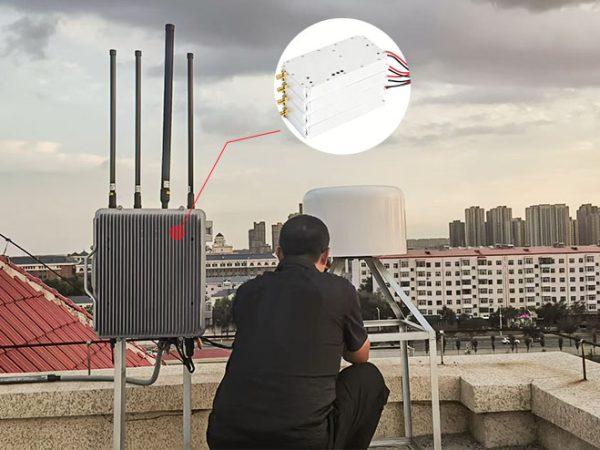
Heilongjiang Weather Center Completes Anti-Drone System Upgrade with Three High-Power Drone Jammer Modules

Tangshan Chem Plant Sealed Drone Gaps With 3 GaN Wideband Modules
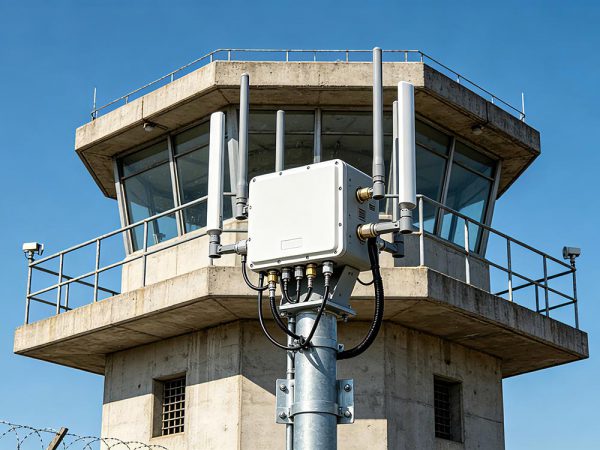
How a National Prison Integrated Our Drone Jamming Module Into Their Fixed Counter-Drone System

Integrating Core RF Power: OEM Drone Jamming Module for Oil Refinery Security | Case Study
Send Us a Message
Related Products
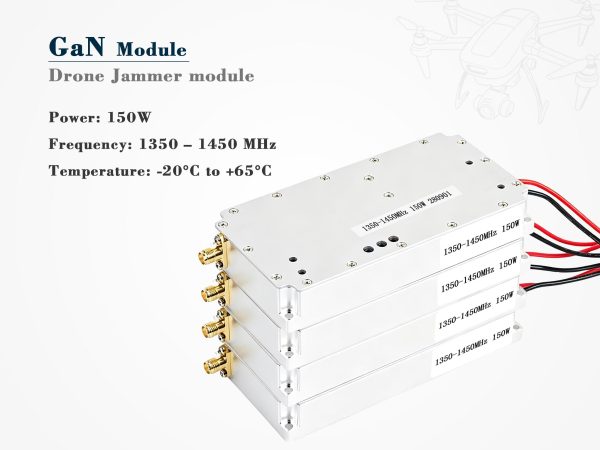
150W 1350–1450MHz GaN Analog Jammer Module
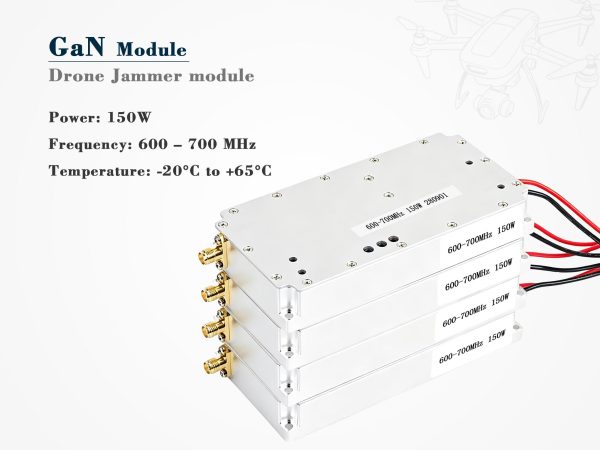
150W 600–700MHz GaN Drone Countermeasure Module
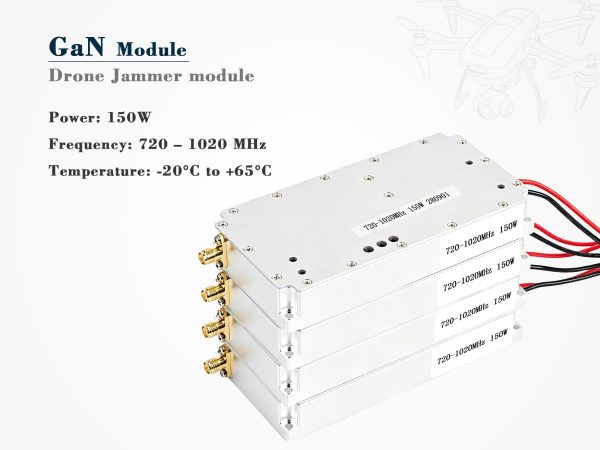
150W GaN Anti-Drone Jammer Module for 720-1020 MHz