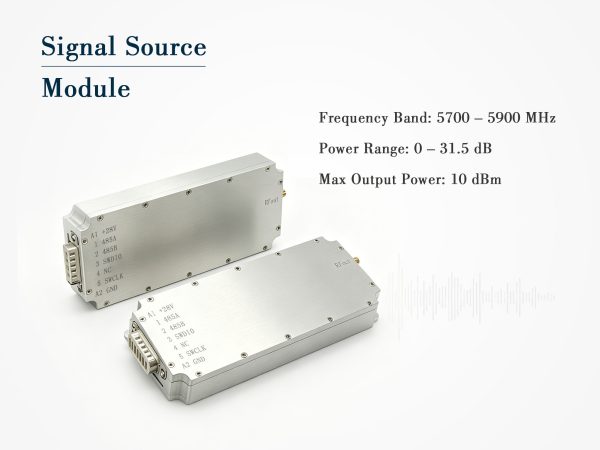
2300-2500MHz Signal Source Module with RS485 & 0.5dB Step
2300-2500MHz digital signal source module, 10dBm max output, 0.5dB power step, RS485 control, SMA female, 7W2 connector, 146x63x17.5mm, 0.21kg.
Wireless connectivity testing
ISM band compliance
Filter and antenna tuning
Production line automation
Education and R&D
Technical Specifications
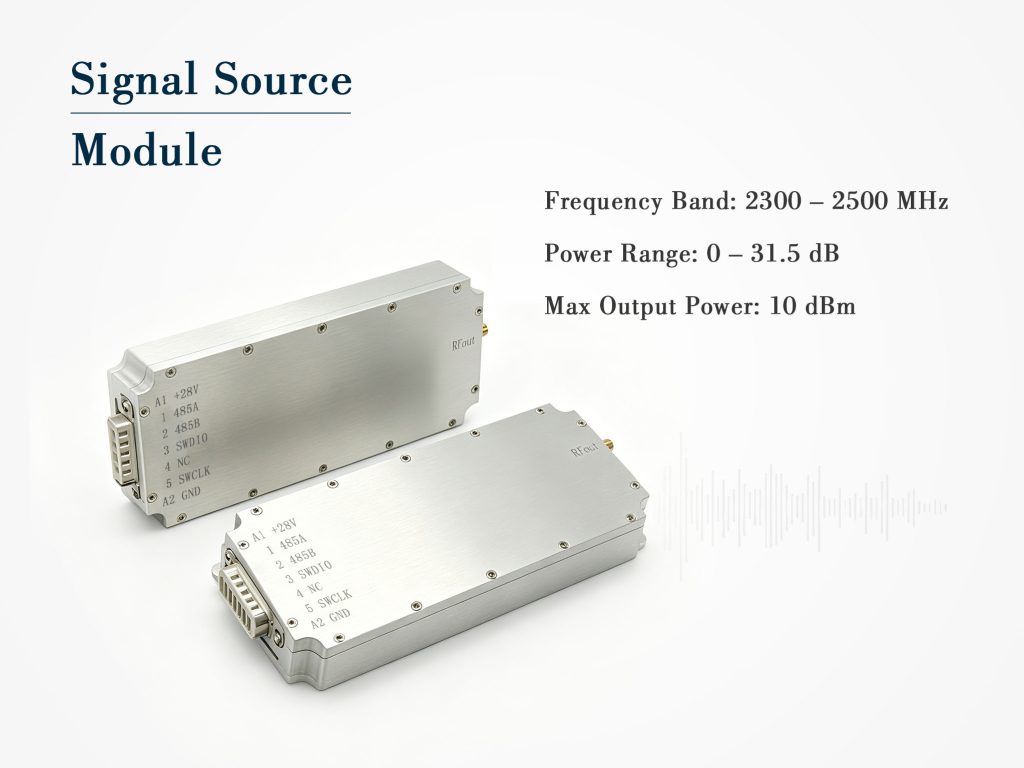
| Parameter | Typical Value |
| Frequency Range | 2300 – 2500 MHz |
| Signal Type | Digital signal source |
| Max Output Power | +10 dBm |
| Output VSWR | ≤ 2.0 |
| Power Adjustment Range | 0 – 31.5 dB (0.5 dB step) |
| Control Interface | RS485 |
| Supply Voltage | 12 – 29 V DC |
| Max Current | 200 mA @ 28 V |
| Output Connector | SMA female |
| Power/Control Connector | 7W2 |
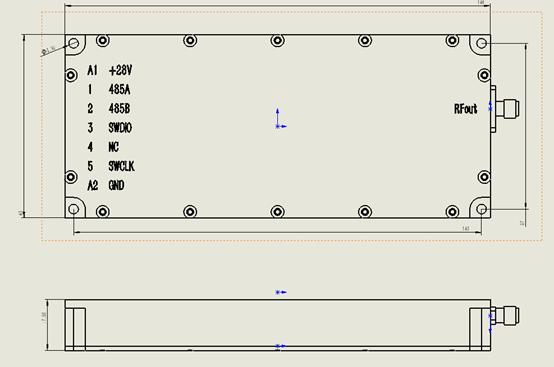
| Dimensions | 146 × 63 × 17.5 mm |
| Weight | 0.21 kg |
Product Details
The stretch from 2300 MHz to 2500 MHz is one of the busiest slices of spectrum in modern wireless. WiFi, Bluetooth, Zigbee, and a growing list of IoT protocols all share this space, plus it sits right next to LTE bands 40 and 30. If you develop, validate, or repair anything that operates here, having a clean, predictable continuous wave signal at your fingertips saves hours of guesswork. This digital signal source module was purpose-built for that job — a stable, no-nonsense RF source that slots directly into automated or manual test setups.
What makes it genuinely useful day-to-day isn’t just the frequency range, though. It’s the combination of half-dB power steps, RS485 control, and a footprint that disappears into whatever enclosure you’re working with.
Pinpoint power control where 1 dB just isn’t enough
Attenuation in 0.5 dB increments doesn’t sound dramatic until you’re trying to measure a receiver’s sensitivity threshold or find exactly where a power amplifier starts to compress. Coarse 1 dB steps can hide a gain curve’s true shape; 0.5 dB reveals it. Across the full 31.5 dB adjustment range, you can dial in test levels with a precision that makes automated limit testing far more reliable. Because the attenuation is solid-state and digitally commanded, run the same sweep ten times or ten thousand — the repeatability stays rock solid.
Control and power through a single hybrid connector
The 7W2 mixed D-sub connector is a small detail that pays off big in daily use. It merges DC power (12 V to 29 V) and RS485 data into one connector, so a single cable bundle replaces the usual mess of separate power bricks and USB converters. At 28 V, the module draws just 200 mA, meaning almost any bench supply, 24 V industrial rail, or battery can run it.
RS485 itself gives you noise immunity, multi-drop capability, and cable runs far longer than you’d ever need on a bench. Address up to 32 units on the same bus, synchronize them from a single script, and suddenly multi-antenna or multi-DUT test systems become a scripting exercise rather than a wiring headache.
Small enough to embed, tough enough to trust
The signal source module measures 146 × 63 × 17.5 mm and weighs 0.21 kg. That’s smaller than a paperback and light enough to mount directly onto a test jig or inside a shielded enclosure with nothing more than a couple of screws. The SMA female output connects directly to standard coax cables; with a VSWR of ≤2.0, the module stays well-behaved even when faced with an imperfect load. No oscillation, no unexpected power drop-offs. Just a steady +10 dBm of RF energy exactly where you set it.
Built for real-world test benches
-
Wireless connectivity testing: Pump a known CW tone into WiFi (802.11b/g/n), Bluetooth, or Zigbee receivers and sweep their sensitivity profiles without tying up a vector signal generator.
-
ISM band compliance: Pre-scan devices for spurious responses in the 2.4 GHz band before heading to the test house.
-
Filter and antenna tuning: Drive passive components with a stable source and track insertion loss or return loss across the band.
-
Production line automation: Embed the module in a test fixture, control it over RS485, and collect consistent pass/fail results shift after shift.
-
Education and R&D: Give students and engineers a hands-on way to explore 2.4 GHz propagation, antenna patterns, or mixer performance.
The signal source module’s digital architecture keeps frequency drift low and phase noise minimal, so even long-duration tests stay accurate. Wide supply voltage tolerance means you can run it off a vehicle battery during field work or a regulated lab supply — either way, it powers up reliably and holds its settings.
If your workflow lives in the 2.3–2.5 GHz range and you’re tired of re-purposing oversized bench generators for simple CW tasks, this signal source module fills the gap without emptying the equipment budget. It’s straightforward, scriptable, compact, and ready to integrate into whatever you’re building next.
Frequently Asked Questions
Case Studies
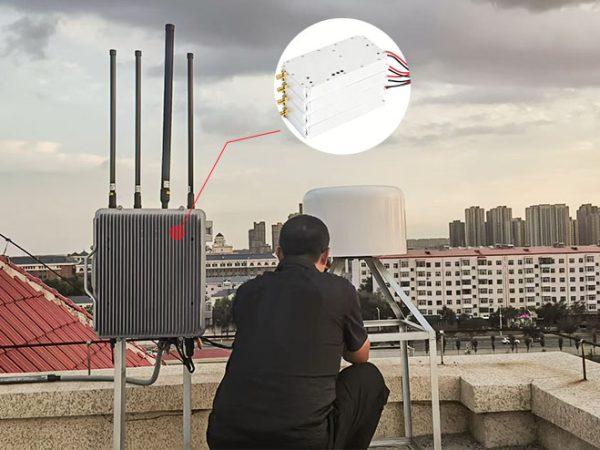
Heilongjiang Weather Center Completes Anti-Drone System Upgrade with Three High-Power Drone Jammer Modules

Tangshan Chem Plant Sealed Drone Gaps With 3 GaN Wideband Modules

How a National Prison Integrated Our Drone Jamming Module Into Their Fixed Counter-Drone System

Integrating Core RF Power: OEM Drone Jamming Module for Oil Refinery Security | Case Study
Send Us a Message
Related Products
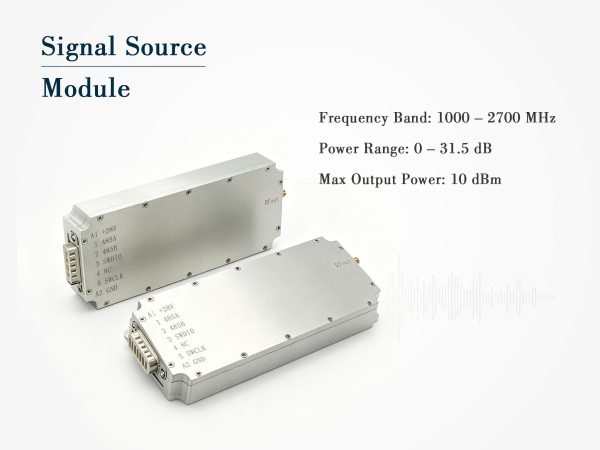
Wideband Signal Source Module – 1000 to 2700MHz, 10dBm with Digital Attenuator
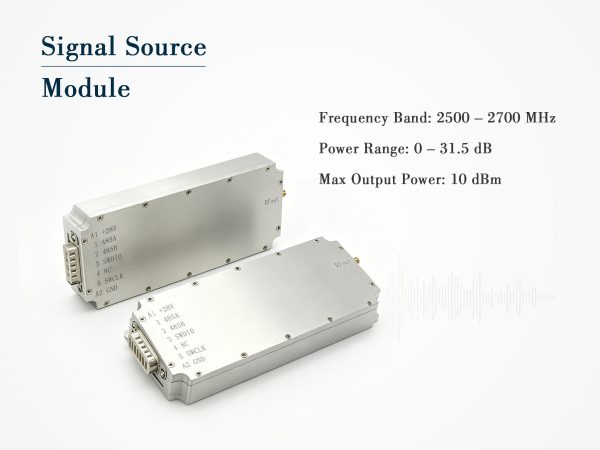
Compact Signal Source Module – 2500–2700MHz, 10dBm with Digital Attenuation
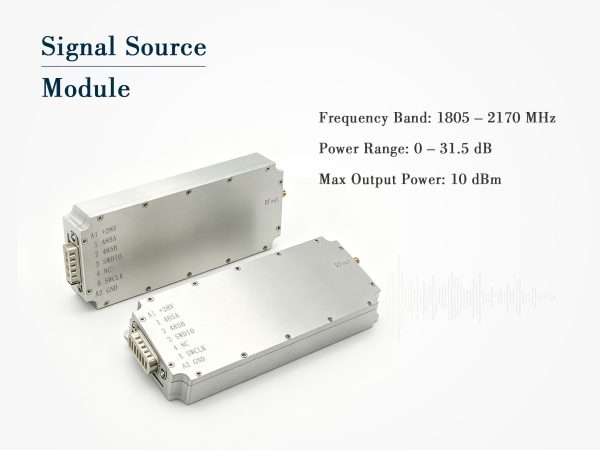
Digital Signal Source Module 1805-2170MHz