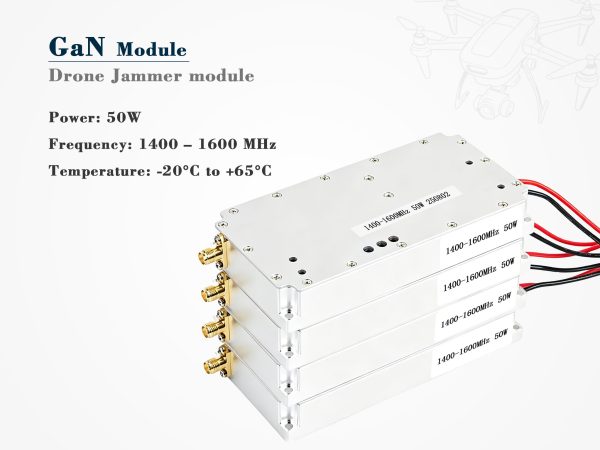
50W GaN Drone Jammer Module 720-1020MHz
50W GaN drone jammer module (720–1020MHz) with integrated high-speed noise modulation, 47±1dBm output, 28V DC, SMA female, 300g.
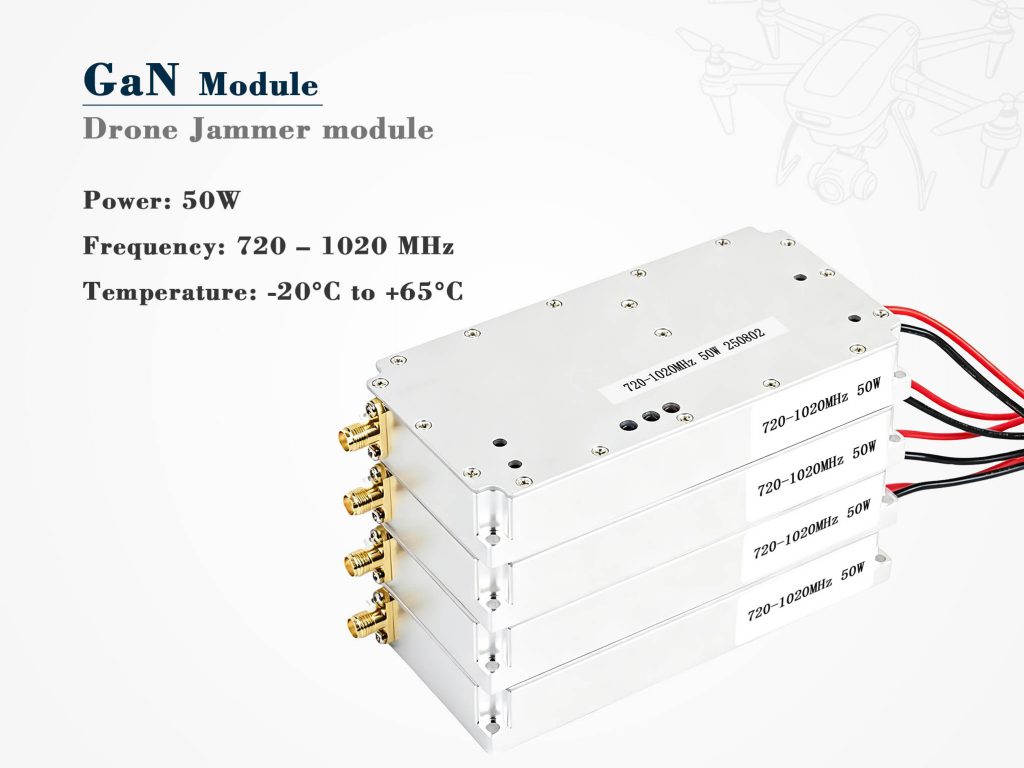

Technical Specifications
| Parameter | Specification | Notes |
| Frequency range | 720 – 1020 MHz | Instantaneous wideband |
| Output power | 50 W (47 ± 1 dBm) | At SMA connector, CW or modulated |
| Supply voltage | 24 – 28 V DC | Nominal 28 V |
| Current draw | ≤ 3.2 – 4.5 A | At 50 W output |
| Modulation source | Built-in high-speed noise | Custom VCO, DDS, SDR options |
| Analog scan speed | 270 kHz (default) | Customizable 100 – 500 kHz |
| Input / output impedance | 50 Ω | SMA female |
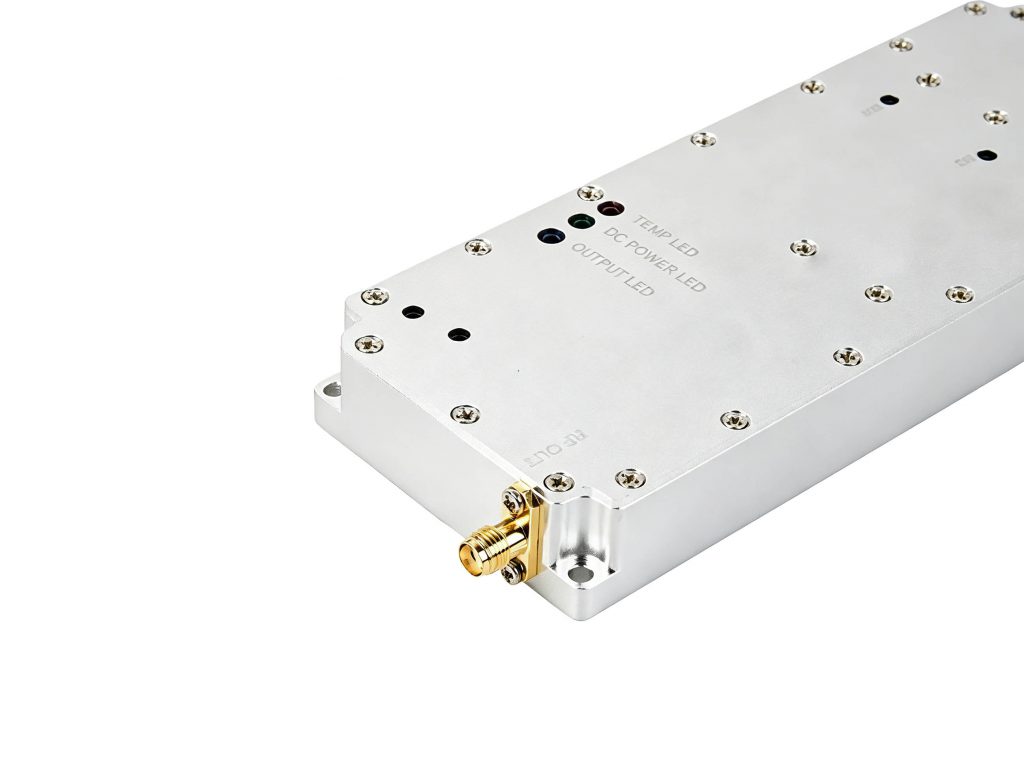
| Protection LEDs | Power, overvoltage, overtemperature | – |
| Operating temperature | -20 to +65 °C | Baseplate temperature |
| Dimensions (L×W×H) | 117 × 58 × 18 mm | Custom form factors available |
| Weight | 300 g | Excluding cables |
| Base material | Copper heat spreader with GaN-on-SiC | High thermal conductivity |
Product Details
When every second counts in securing airspace, having a reliable, high-power jammer module is a must. The 50W GaN drone jammer module covering 720 to 1020 MHz gives you that edge – it’s built around gallium nitride on silicon carbide technology and comes with a built-in high-speed noise modulator, so you can disrupt drone control and video links right out of the box. No fragile lab setups, no fiddly external sources. Just clean, wideband RF muscle in a compact, rugged package.
What Makes This Drone Jammer Module Stand Out
You’ll immediately notice this isn’t a repackaged generic amplifier. The entire signal chain is designed with an AB-class GaN-on-SiC architecture that delivers true instantaneous wideband performance from 720 MHz to 1020 MHz. Because the die is mounted on a copper heat spreader, heat gets pulled away fast – that’s why the module stays stable even during long-duration sweeps or continuous noise jamming at full 50 watts.
Inside, a high-speed noise modulation source is already integrated. It generates dense, broadband noise that chews through typical drone downlinks without requiring external signal generators. Need something more tailored? The baseboard is ready for custom modulation sources: VCO, DDS, or even software-defined radio front-ends. You just define the waveform, and the module’s wideband GaN stage takes care of the rest.
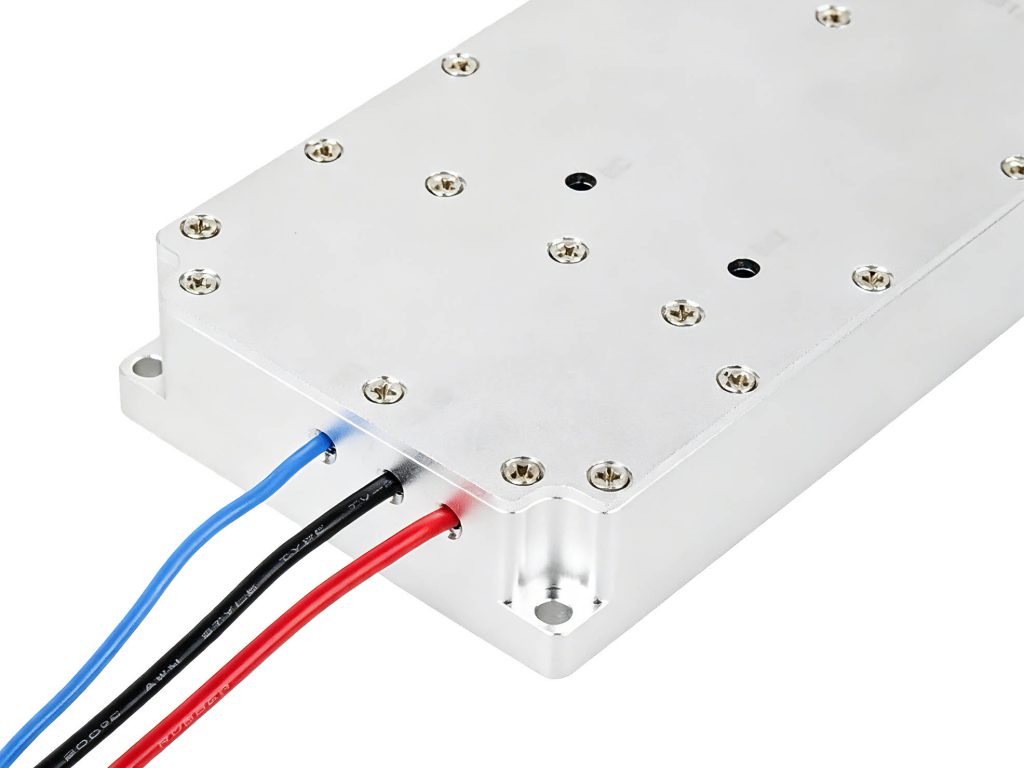
The control interface is kept simple. A single SMA female connector handles the RF output, and DC power comes through a rugged connector block. Three LED indicators – power, overvoltage, and overtemperature – give you at-a-glance health status, something surprisingly rare on modules in this class.
Where It Fits
Drone threat scenarios keep evolving, and so should your RF countermeasure kit. This module sits right in the sweet spot for jamming common consumer and commercial drone frequencies that overlap the 900 MHz ISM band and nearby telemetry channels. Use it as a standalone noise barrage source or pair it with a directional antenna to focus energy precisely. The lightweight build – just 300 grams – means you can integrate it into backpack systems, drone-detection-and-defeat boxes, or convoy protection suites without breaking the weight budget.
Because the GaN transistor operates well below its maximum ratings, you get plenty of headroom even when ambient temperatures climb. That translates to fewer field failures and consistent jamming range shift after shift.
Customization That Actually Delivers
One size rarely fits all in this field, so the module platform is designed to adapt. The most common tweaks we handle:
-
Scan speed: adjust anywhere from 100 kHz up to 500 kHz to match the target’s hopping pattern.
-
Signal source: swap the internal noise source for a voltage-controlled oscillator, a DDS generator, or an SDR input that lets you run complex deception waveforms.
-
Form factor: need a different mounting footprint or connector orientation? Custom dimensions and connector placements are on the table.
-
Extended bands: while the core design is 720–1020 MHz, we can re-tune matching networks for adjacent bands when project quantities justify it.
Each custom unit still goes through the same thermal and RF stress tests, so you’re never trading reliability for a niche feature.
Frequently Asked Questions
Case Studies
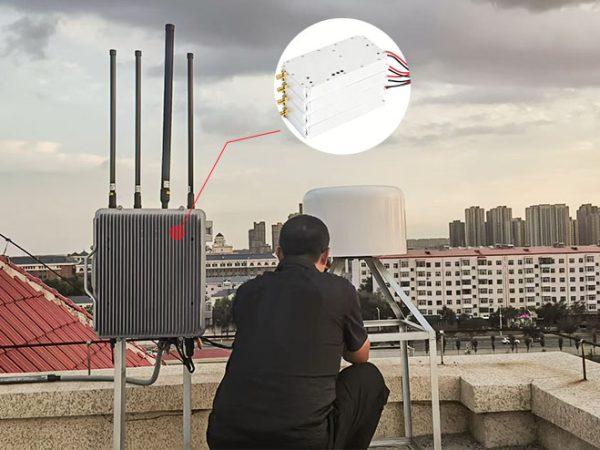
Heilongjiang Weather Center Completes Anti-Drone System Upgrade with Three High-Power Drone Jammer Modules

Tangshan Chem Plant Sealed Drone Gaps With 3 GaN Wideband Modules

How a National Prison Integrated Our Drone Jamming Module Into Their Fixed Counter-Drone System

Integrating Core RF Power: OEM Drone Jamming Module for Oil Refinery Security | Case Study
Send Us a Message
Related Products

3400–3600 MHz 50W Drone Countermeasure Module
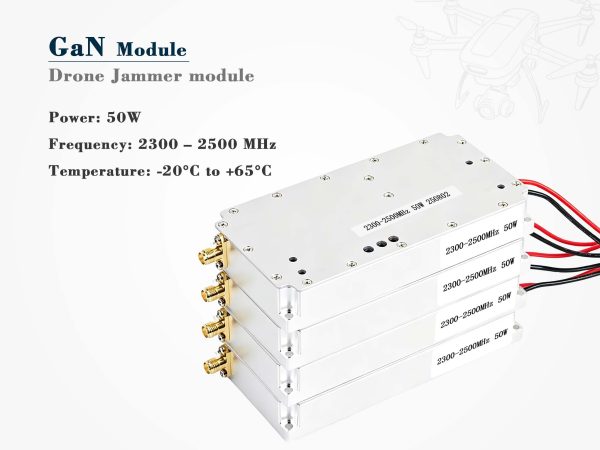
2300–2500MHz 50W GaN Module for Drone Countermeasure and Signal Shielding
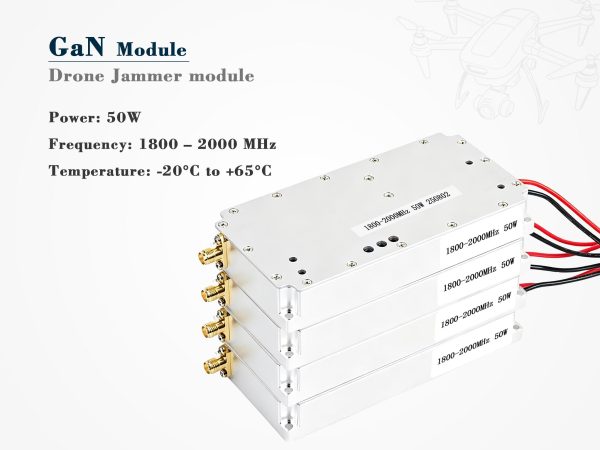
Powerful 50W GaN Jammer Module 1800-2000MHz