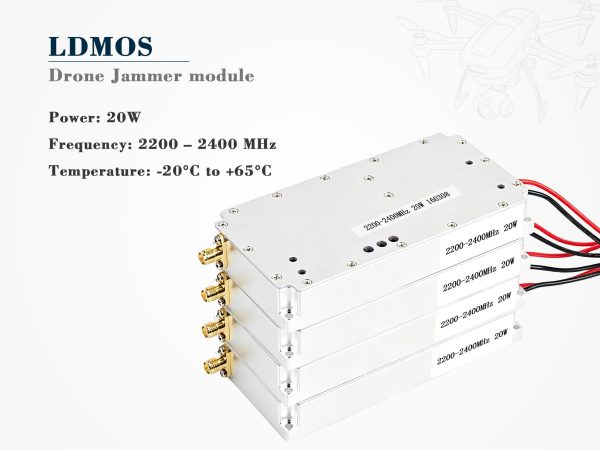
Powerful 20W Anti Drone Module 1600–1800MHz
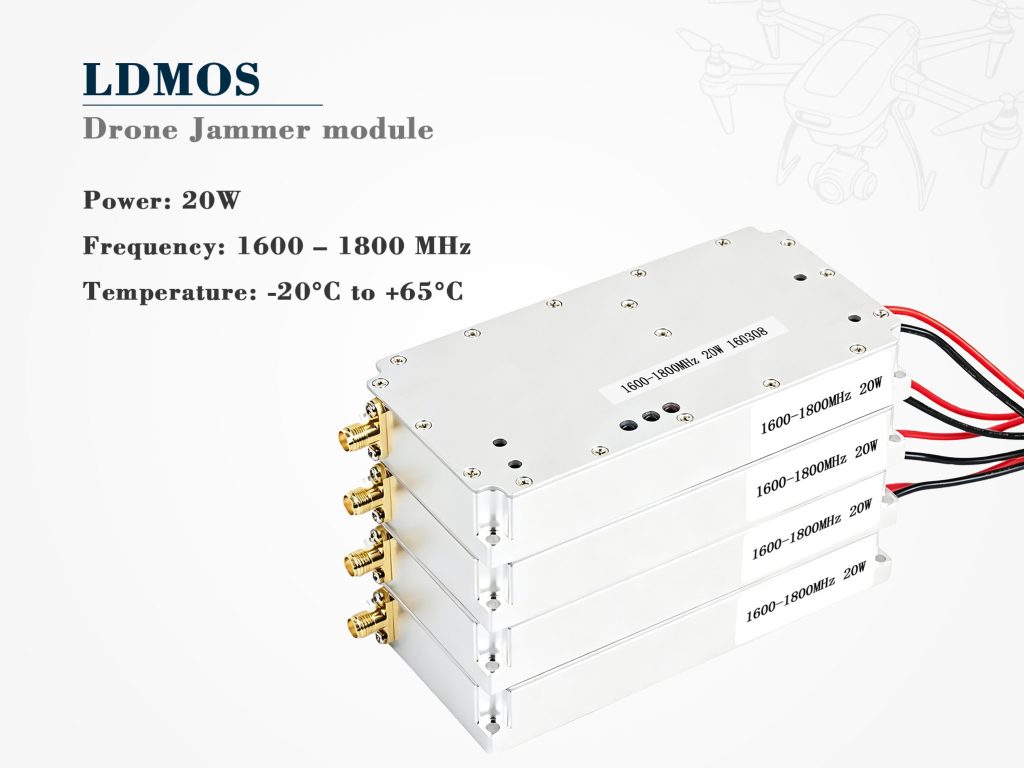
20W anti drone module covers 1600–1800MHz with 20W output, DC 24–29V input, ≤2.5A draw, SMA output, and built-in sweep source. Compact LDMOS design.
Technical Specifications
| Parameter | Specification | Notes |
| Frequency range | 1600~1800 MHz | Covers common drone control and video links |
| Output power | 20 W | 43 dBm typical into 50Ω load |
| Supply voltage | DC 24~29 V | Regulated input recommended |
| Current draw | ≤2.5 A | At maximum output |
| Modulation source | Built-in high-speed sweep source | Analog modulation ready |
| Analog scan speed | High-speed sweep across band | No external VCO/DDS required |
| Input / output impedance | Output 50Ω, modulation input high-Z | SMA female output connector |
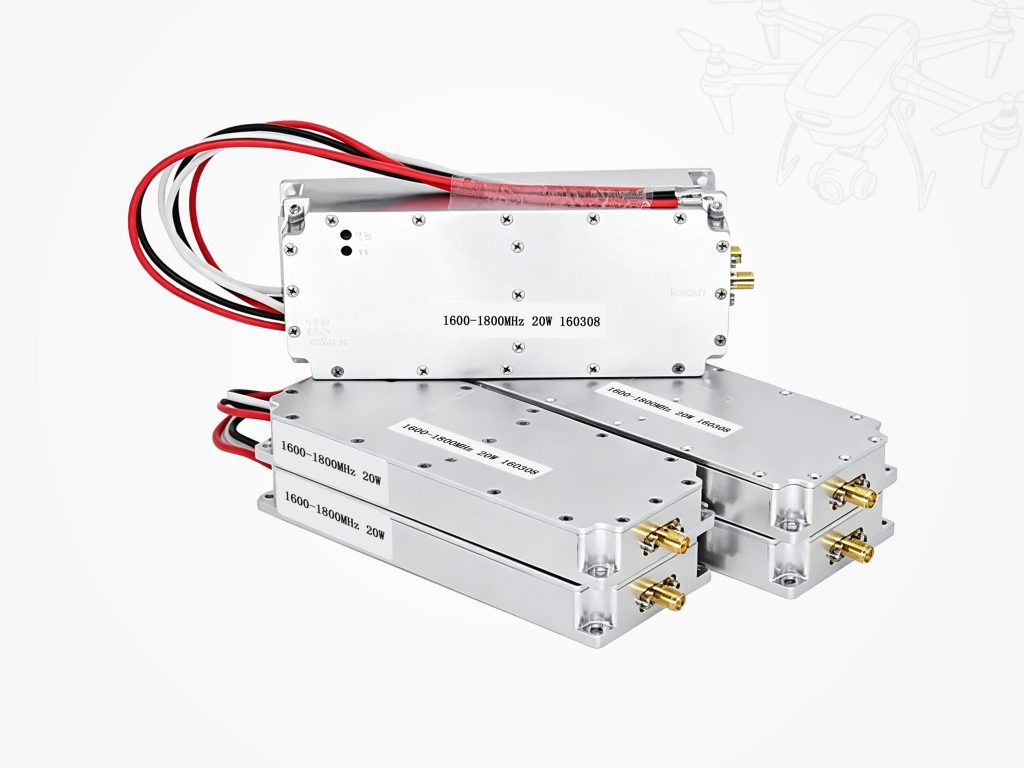
| Protection LEDs | Power switch, overvoltage, overtemperature | Visual status indication |
| Operating temperature | -20~+65 °C | Baseplate mounting recommended for high-temp use |
| Dimensions (L×W×H) | 115.5×46.5×21 mm | Compact for portable or fixed use |
| Weight | 0.21 kg | Lightweight aluminum base |
| Base material | Aluminum alloy housing with RF-grade PCB | Good thermal spreading |
Product Details
The 20W anti drone module is a compact LDMOS-based RF jammer board built for counter-UAS operations in the 1600–1800MHz range. It provides 20W of continuous output into a 50Ω SMA female port and maintains a typical output VSWR of 2.0 or lower. The board runs from a 24–29V DC supply and pulls no more than 2.5A, which makes it easy to power from industrial DC buses, battery banks, or mobile platforms.
20W Anti Drone Module RF Performance
The final stage uses LDMOS technology to deliver a practical mix of gain, efficiency, and ruggedness. Typical efficiency is at least 40%, so only a fraction of the input power becomes heat. That matters in sealed enclosures where air flow is limited. The covered band from 1600MHz to 1800MHz includes common drone control, telemetry, and video downlink channels. With 20W of RF output available at the SMA connector, you can drive a directional antenna directly or use the module as a driver for a larger PA.
Because output VSWR is specified at ≤2.0, the amplifier tolerates moderate mismatch from antennas or cables. It will not immediately fold back on small return-loss changes. Still, good practice is to use a 50Ω antenna with acceptable match across the full band. This keeps output power stable and reduces stress on the LDMOS transistor.
Built-In Sweep Source and Analog Path
A key advantage of this 20W anti drone module is the built-in high-speed sweep source. You do not need to add a separate DDS, VCO, or waveform generator for basic jamming tasks. The internal analog source sweeps across the operating band and feeds the PA directly. That removes several RF interconnects and simplifies system design. It also lowers the total bill of materials for small counter-drone projects.
The modulation input is analog-ready, so external baseband or noise sources can be injected when custom waveforms are required. For many deployments, the internal sweep is enough to create a moving RF signal that disrupts drone links without precise pattern programming.
Control, LEDs, and Protection
This 20W anti drone module uses simple enable logic. Apply +5V or leave the control pin floating to turn the module on. Ground the pin to shut off RF output. This makes it compatible with microcontrollers, switches, or remote-control lines. Three onboard LEDs show power switch, overvoltage, and overtemperature status. If a fault occurs, the LED gives a quick visual cue before you need to probe the board.
The operating temperature range is -20°C to +65°C. The aluminum base material helps pull heat away from the RF devices. For continuous use at the high end of the temperature range, mount the baseplate to a metal chassis, add thermal paste, or use a small fan. Overvoltage protection helps guard the module when supply transients appear on 24V or 28V vehicle lines.
Integration and Mechanical Fit
At 115.5×46.5×21mm and 0.21kg, this 20W anti drone module fits easily into compact RF decks, drone-defense backpacks, or vehicle-mounted equipment. The SMA female output allows a standard cable connection to antennas or external filters. Keep RF cables short and well-shielded to avoid unwanted loss. For the DC input, use a regulated 24–29V supply with adequate current headroom.
If you are building a multi-band system, you can combine this module with other RF boards or a control backplane. The enable pin and LED status make it straightforward to monitor and sequence multiple modules. Check our drone defense modules page for matching antennas, filters, and PA stages that pair well with this board.
Deployment and Compliance
Before deploying any 20W anti drone module, confirm that your use case is allowed under local laws. RF jamming is restricted in many regions. The FCC publishes <a href=”https://www.fcc.gov/general/jammer-enforcement” rel=”dofollow”>jammer enforcement guidance</a> that explains prohibited operation in the United States. Always work with authorized agencies or obtain proper experimental licenses where applicable. This module is intended for authorized counter-UAS testing and defense integration, not for unlicensed interference with public communications.
Overall, the 20W anti drone module provides a practical mix of output power, compact size, and built-in signal generation. Its 1600–1800MHz coverage, 24–29V DC supply requirement, and simple enable logic make it easy to integrate into larger systems. The LDMOS design, onboard protection LEDs, and 50Ω SMA output reduce the number of external components needed for a working counter-drone RF chain.
Frequently Asked Questions
Case Studies
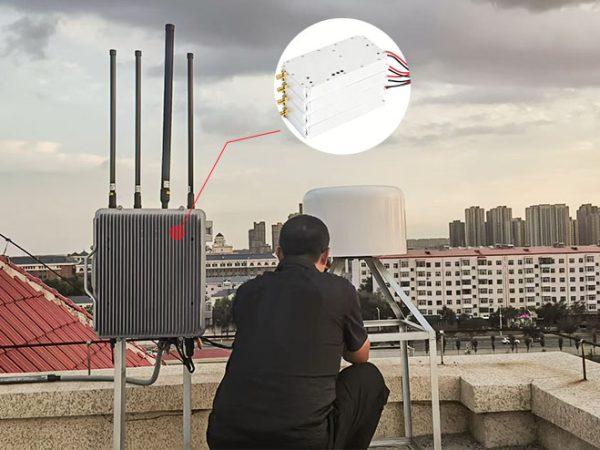
Heilongjiang Weather Center Completes Anti-Drone System Upgrade with Three High-Power Drone Jammer Modules

Tangshan Chem Plant Sealed Drone Gaps With 3 GaN Wideband Modules
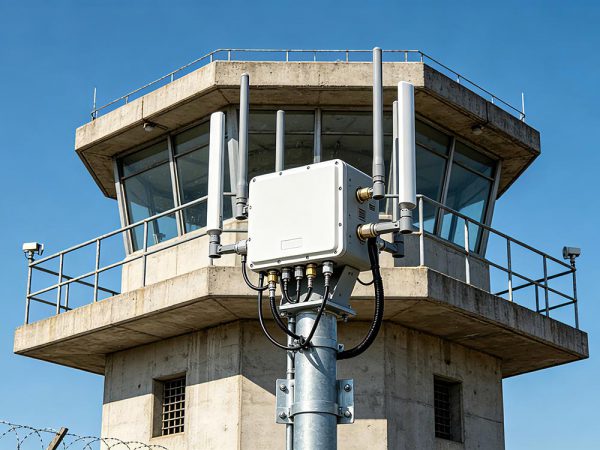
How a National Prison Integrated Our Drone Jamming Module Into Their Fixed Counter-Drone System

Integrating Core RF Power: OEM Drone Jamming Module for Oil Refinery Security | Case Study
Send Us a Message
Related Products
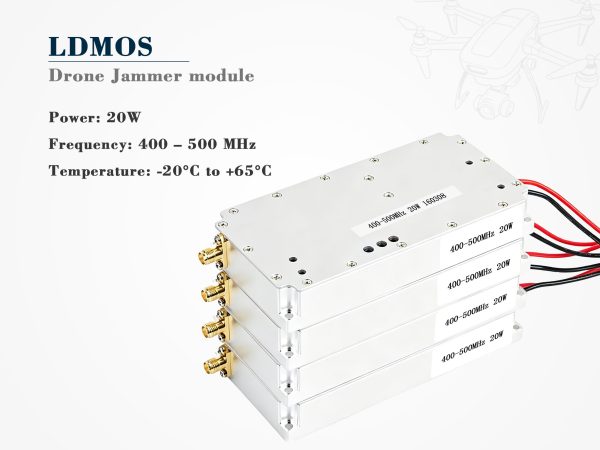
20W LoRa Drone Jammer Module | 400–500MHz RF Test
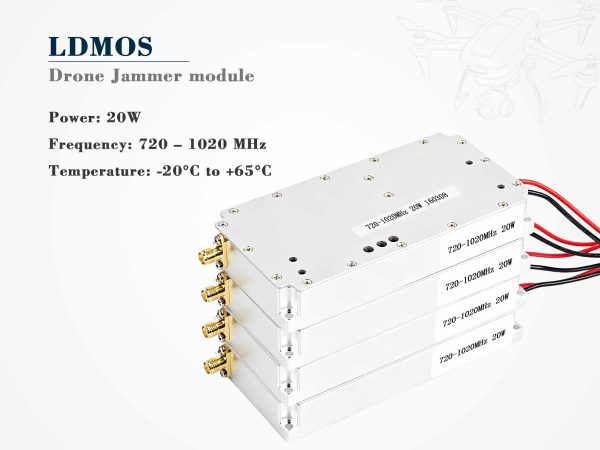
20W 720–1020MHz UAV Jammer Module | LDMOS Analog
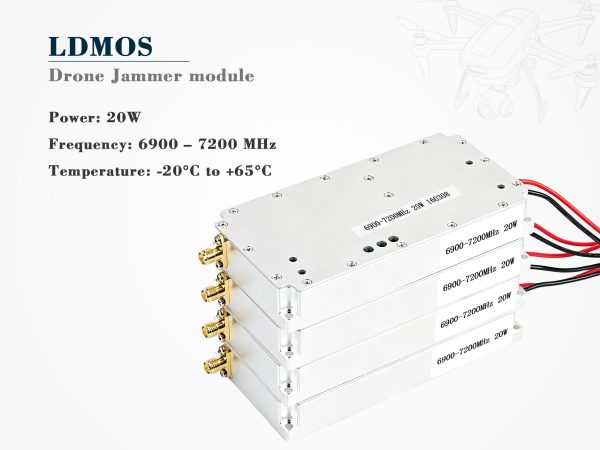
Powerful 20W LDMOS Drone Jammer Module for 6.9–7.2 GHz