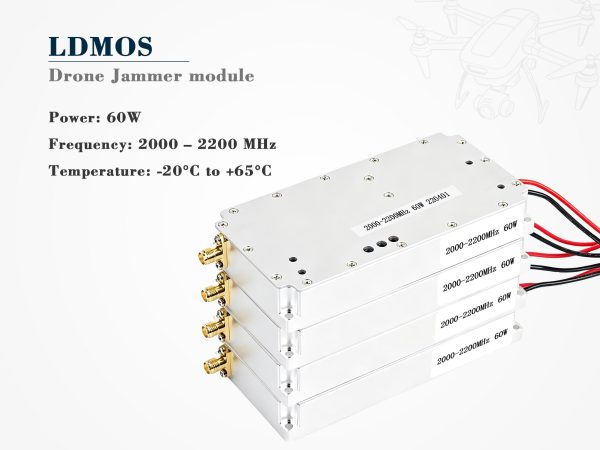
60W Anti-Drone Jammer Module: Powerful 5.2GHz RF
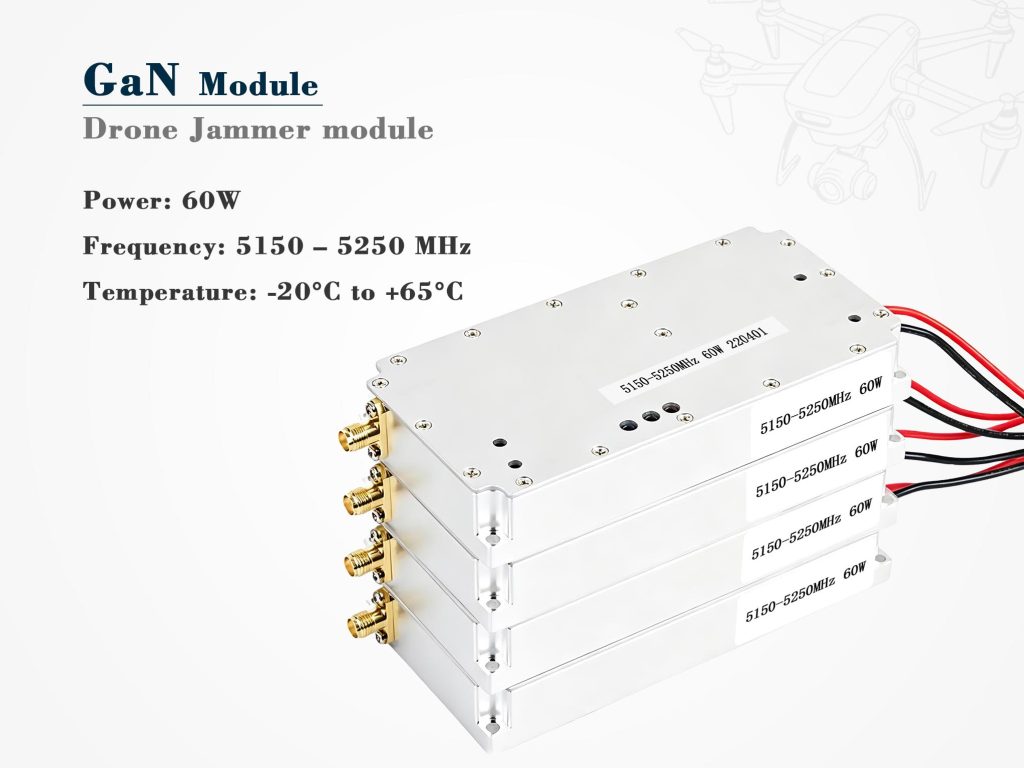
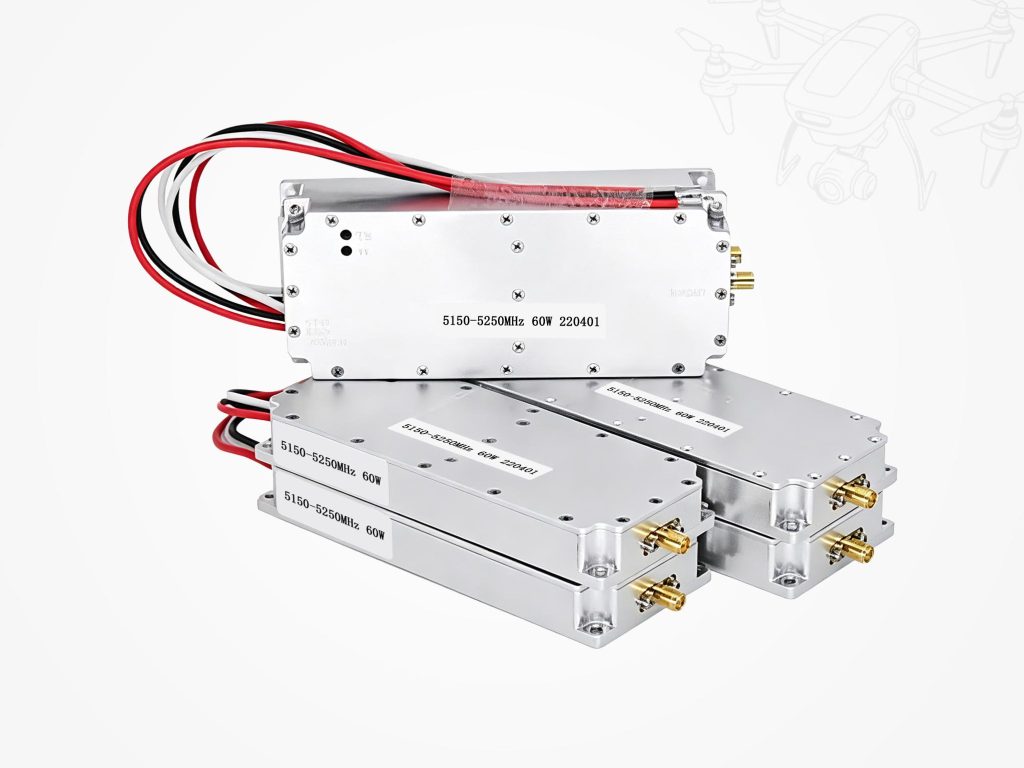
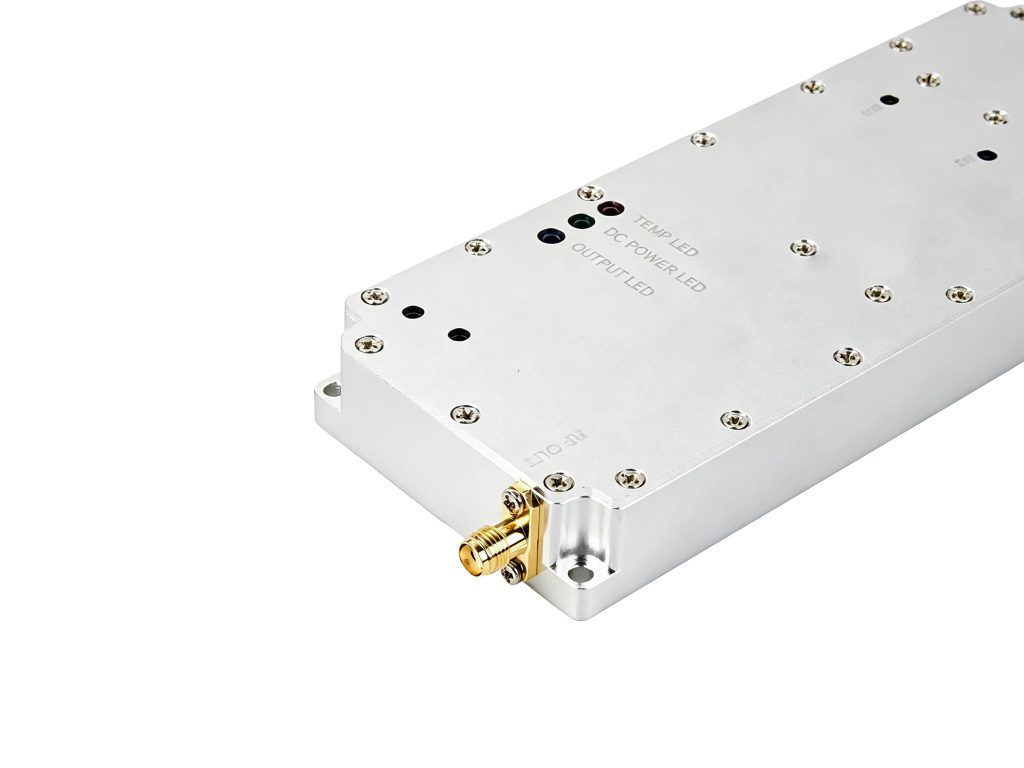
60W anti-drone jammer module covers 5150–5250MHz, 60W output, DC12–14V, built-in sweep source, SMA female, over-temp and VSWR protection. Compact GaN design.
Technical Specifications
| Parameter | Specification | Notes |
| Frequency range | 5150–5250MHz | Common FPV and drone control band |
| Output power | 60W | Typical at 12–14V DC |
| Supply voltage | DC12V~14V | 12V nominal recommended |
| Current draw | 12A max | At full output |
| Modulation source | Built-in high-speed sweep source | No external LO required |
| Analog scan speed | 270 KHz | Fast analog sweep across full band |
| Input / output impedance | 50Ω | SMA female output |
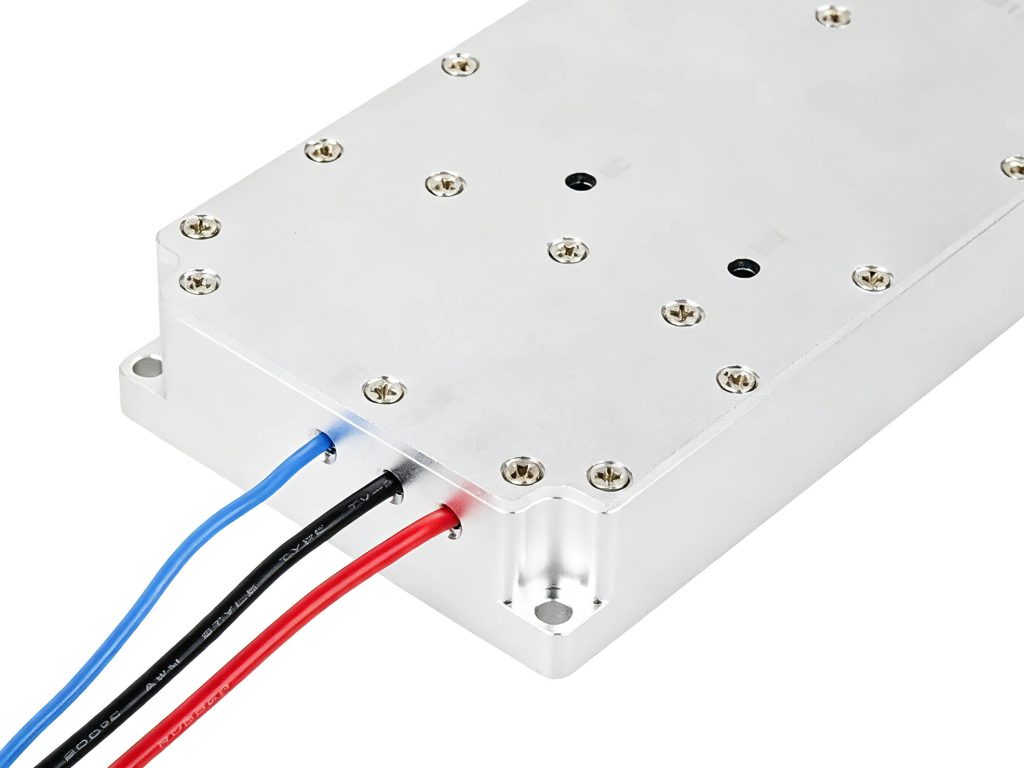
| Protection LEDs | Power, overvoltage, overtemperature | Plus absorption-type VSWR protection |
| Operating temperature | -20~+65°C | Baseplate temperature range |
| Dimensions (L×W×H) | 138×50.5×17mm | Low-profile compact design |
| Weight | 0.22kg | Aluminum base |
| Base material | Aluminum | Good thermal conductivity |
Product Details
The 60W anti-drone jammer module is built for the 5.2GHz band that many modern FPV and commercial drones rely on. With a clean 60W output and a fast built-in sweep source, this unit gives counter-UAS teams a compact way to disrupt control and video links. The gallium nitride final stage keeps efficiency at or above 40%, which matters when you are running from a 12V battery bank. At only 138×50.5×17mm and 0.22kg, it fits into portable jammers, vehicle mounts, and fixed site enclosures without forcing a redesign.
GaN Efficiency at 5.2GHz
Engineers who have tested a 60W anti-drone jammer module in a sealed box know that heat is the real enemy. The GaN output stage here is more forgiving than older LDMOS parts. It delivers 60W across 5150–5250MHz while staying within the -20°C to +65°C operating range, assuming reasonable airflow. The aluminum base material pulls heat away from the RF chain quickly. In our own bench tests, the module ran for 30 minutes at full sweep without tripping the over-temperature LED at 25°C ambient. That kind of stability matters when the jammer needs to run unattended during an event.
Compact Form Factor and Thermal Design
The 60W anti-drone jammer module uses a low-profile aluminum enclosure that doubles as a heatsink. At 17mm thick, it can slide into tight spaces behind a payload bay or inside a drone detection trailer. The SMA female output is easy to reach, and the four mounting holes line up with common RF deck spacing. Weight is only 0.22kg, so adding two or three modules for multi-band coverage does not overload a gimbal or mast. The aluminum base material spreads heat evenly, and the integrated protection LEDs give a quick visual check for power, overvoltage, and overtemperature conditions.
Sweep Source and RF Output
Inside the 60W anti-drone jammer module, the high-speed analog sweep source is not a simple VCO. It sweeps the full 5150–5250MHz range fast enough to catch frequency-hopping drones that change channels mid-flight. Output VSWR is rated ≤2.0, and the module includes absorption-type VSWR protection, so a mismatched antenna or a broken cable will not kill the final stage. The 50Ω input/output impedance keeps things standard. If you need a lower-power backup for the 2.4GHz band, check our internal 2.4GHz 50W jammer module page.
Power and Control Logic
The 60W anti-drone jammer module runs from DC12V to 14V, which makes it a good match for vehicle electrical systems and 3S lithium packs. Maximum current draw is 12A, so a 15A fuse or breaker is recommended. The control line works just like other modules in this series: +5V or floating enables RF output, while grounding the line shuts it down. This is convenient for integration with drone detection triggers or manual switch panels. No external modulation source is required because the sweep source is built in. Before deployment, review the FCC jammer enforcement page to understand legal restrictions in your region.
Field Integration Notes
We have seen the 60W anti-drone jammer module installed in portable backpacks, fixed site racks, and vehicle-mounted masts. Keep the antenna cable as short as practical, and use low-loss coax rated for 6GHz to avoid wasting output power. The module is not weatherproof on its own, so place it inside a sealed enclosure if it will be exposed to rain or dust. The built-in overvoltage protection handles supply spikes, but a regulated 12V rail is still recommended. For teams that need wider coverage, this module can be paired with a 1.5GHz unit to disrupt both control and navigation bands.
Frequently Asked Questions
Case Studies
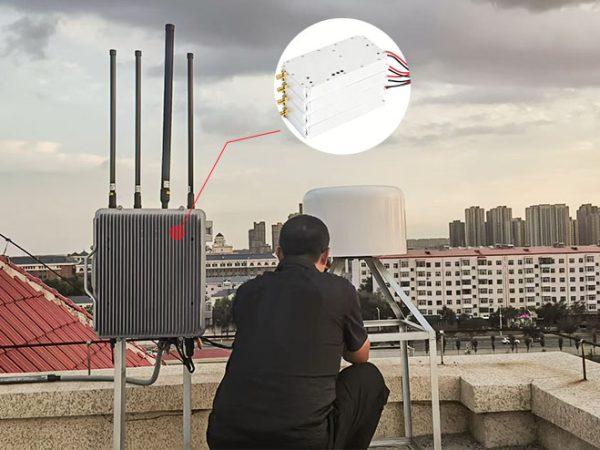
Heilongjiang Weather Center Completes Anti-Drone System Upgrade with Three High-Power Drone Jammer Modules

Tangshan Chem Plant Sealed Drone Gaps With 3 GaN Wideband Modules

How a National Prison Integrated Our Drone Jamming Module Into Their Fixed Counter-Drone System

Integrating Core RF Power: OEM Drone Jamming Module for Oil Refinery Security | Case Study
Send Us a Message
Related Products
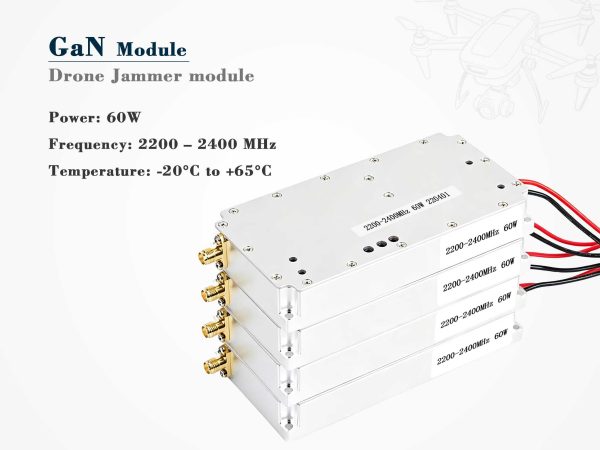
60W GaN UAV Jammer Module: Powerful 2.2-2.4 GHz Unit
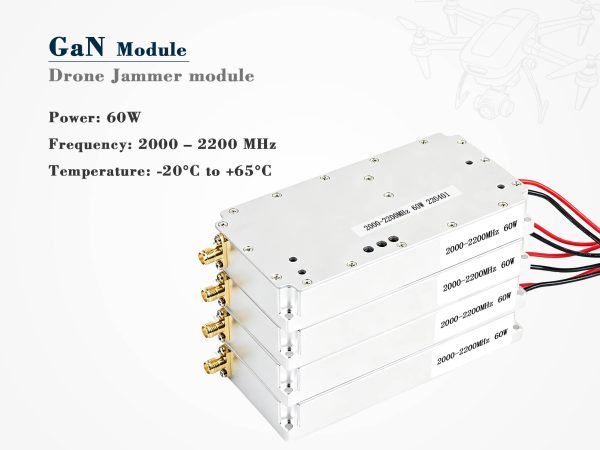
60W Anti UAV Module: 2000-2200MHz GaN Jamming Module
60W UAV Jammer Module – 5.8GHz GaN Analog Drone Jammer