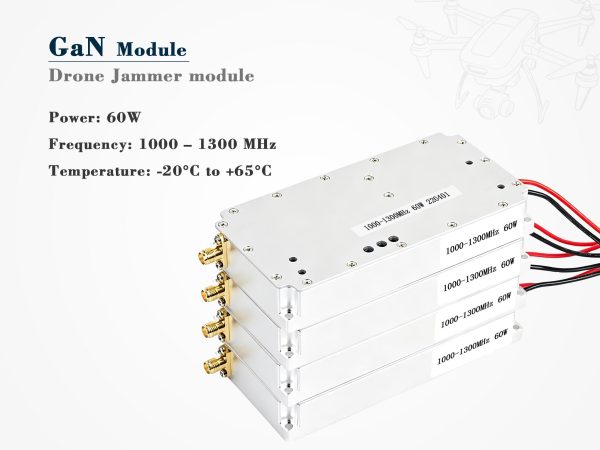
60W GaN UAV Jammer Module: Powerful 2.2-2.4 GHz Unit
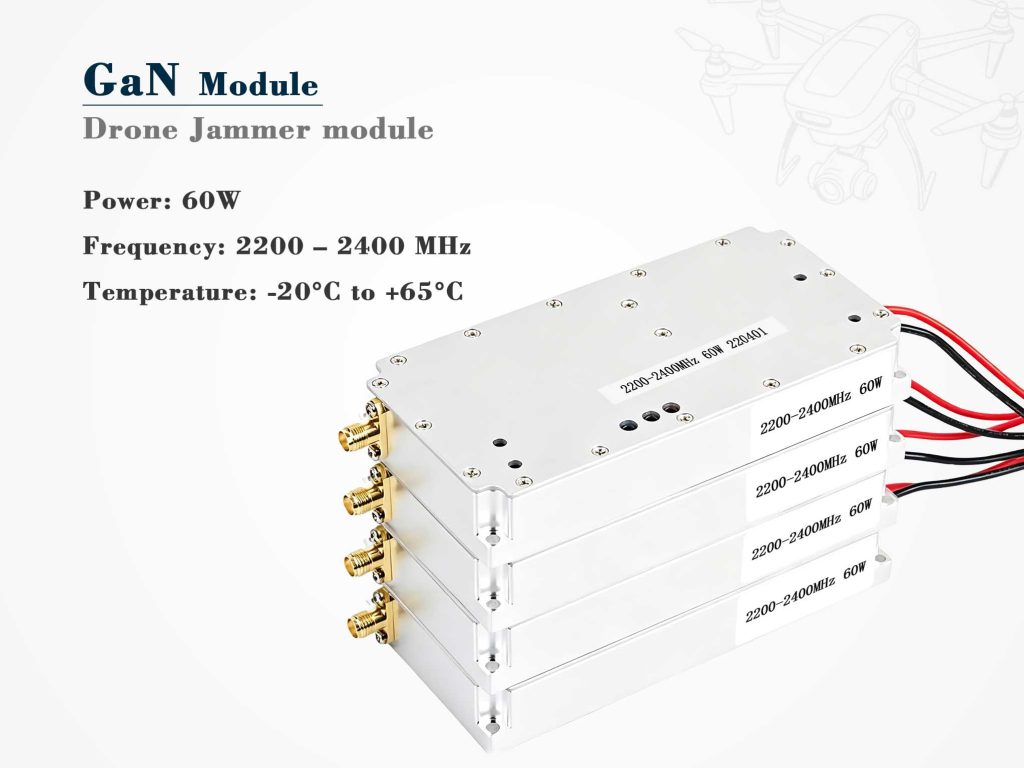
60W GaN UAV jammer module covers 2200-2400MHz, 12-14V DC, 13A max, SMA female, built-in sweep source, VSWR protection, LED alerts.
Technical Specifications
| Parameter | Specification | Notes |
| Frequency range | 2200~2400MHz | Covers common drone control/video links |
| Output power | 60W | Typical at 12–14V DC |
| Supply voltage | DC12V~14V | Regulated supply recommended |
| Current draw | 13A max | At full output |
| Modulation source | Built-in high-speed sweep source | No external generator needed |
| Analog scan speed | High-speed analog sweep | Fixed by internal source |
| Input / output impedance | 50Ω nominal | SMA female output |
| Protection LEDs | Power, overvoltage, overtemperature | Plus absorptive VSWR protection |
| Operating temperature | -20~+65°C | Ensure proper heatsinking |
| Dimensions (L×W×H) | 138×50.5×17mm | Compact GaN deck |
| Weight | 0.22kg | Lightweight for portable use |
| Base material | Aluminum alloy (typical) | Metal housing with heat-spreader base |
Product Details
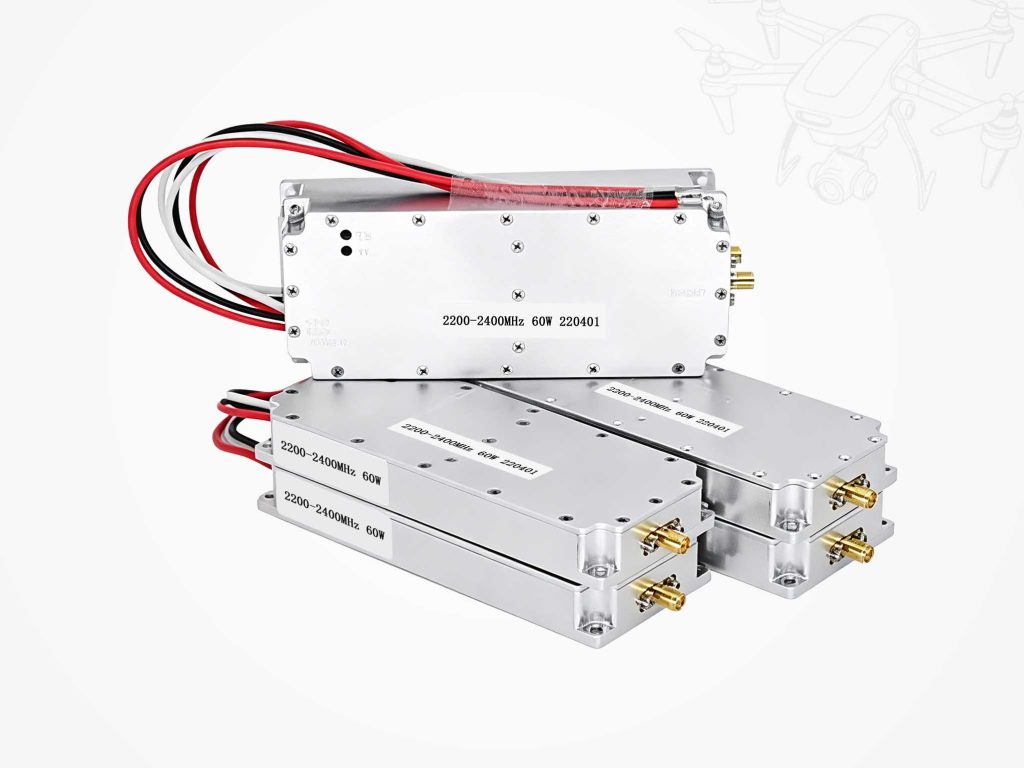
The 60W GaN UAV jammer module is a compact GaN-based RF deck designed for 2200–2400MHz counter-UAS applications. It puts a 60W output stage, a built-in high-speed sweep source, and an absorptive VSWR protection circuit into a 138×50.5×17mm aluminum housing. The module weighs only 0.22kg and runs from a 12–14V DC rail, which makes it easier to fit into portable or vehicle-mounted jamming systems than many higher-voltage LDMOS decks.
GaN Design in the 60W GaN UAV Jammer Module
The GaN output device inside the 60W GaN UAV jammer module keeps the module efficient at 60W while working across 2200–2400MHz. Efficiency is rated at 40% or higher, and the RF output is matched to 50Ω through an SMA female connector. Output VSWR is specified at 2.0 or less, so minor antenna mismatches do not immediately stress the final stage. The internal sweep source removes the need for an external DDS or function generator, so you can drop this deck into an existing RF chain with fewer boxes.
Because the interference source is built in, the module behaves as a self-contained analog jammer. The high-speed sweep moves across the full band, which helps deny frequency-hopping drones that rely on 2.2–2.4GHz control links. If you are comparing technologies, this GaN technology overview explains why GaN handles high-frequency power density well.
For higher-power requirements, you may also check our 80W UAV jammer module.
Supply Voltage and Control Logic
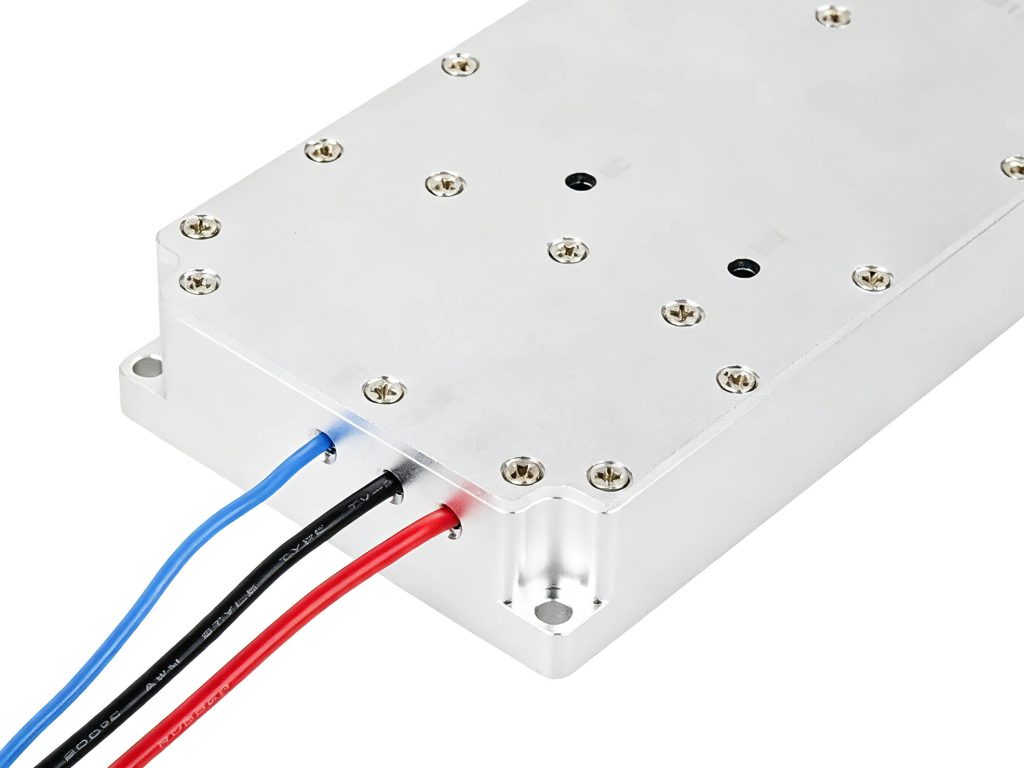
The 60W GaN UAV jammer module accepts 12–14V DC and can draw up to 13A at full output. A regulated 13.8V supply with at least 13A continuous rating is a practical choice. If your system already uses a 12V battery, make sure the wiring and connectors can handle the current without excessive voltage drop. The control line enables the module when you apply +5V or leave it floating, and disables it when you pull the line to ground. LEDs show power switch, overvoltage, and overtemperature status.
The 60W GaN UAV jammer module does not include reverse-polarity protection, so double-check the DC input before powering up. Use a current-limited supply during bench testing to avoid overcurrent damage. The absorptive VSWR protection helps protect the GaN transistor from reflected power, but it is not a substitute for a good antenna match.
Thermal and Mechanical Notes
The board is 138mm long, 50.5mm wide, and 17mm thick. It weighs 0.22kg, so it adds very little mass to a portable counter-drone payload. The metal base plate must be mounted to a flat heatsink or chassis surface with thermal interface material. Even at 40% efficiency, 60W RF output means roughly 90W of DC input and around 30W or more of heat to dissipate. Do not run the module in free air for extended periods without a proper thermal path.
The SMA female output is on the end panel. Use a torque wrench rated for SMA connectors to avoid damaging the center pin. Keep the output cable as short as possible to reduce insertion loss and maintain effective radiated power.
Typical Deployments
This 60W GaN UAV jammer module fits fixed, vehicle-mounted, and man-portable counter-drone systems. The 12–14V supply requirement makes it compatible with lead-acid or lithium battery packs commonly used in field equipment. The built-in sweep source and compact form factor reduce the number of external modules needed, which simplifies system integration and saves space in crowded RF enclosures.
Check local regulations before transmitting. Unauthorized jamming is restricted in many countries. The FCC jammer enforcement page outlines why permission is usually required.
Frequently Asked Questions
Case Studies
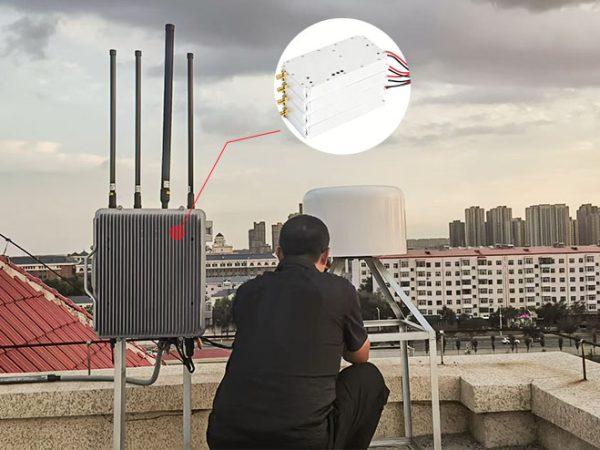
Heilongjiang Weather Center Completes Anti-Drone System Upgrade with Three High-Power Drone Jammer Modules

Tangshan Chem Plant Sealed Drone Gaps With 3 GaN Wideband Modules

How a National Prison Integrated Our Drone Jamming Module Into Their Fixed Counter-Drone System

Integrating Core RF Power: OEM Drone Jamming Module for Oil Refinery Security | Case Study
Send Us a Message
Related Products
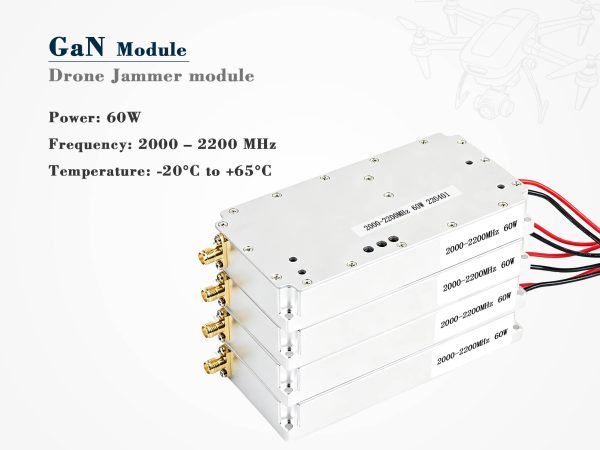
60W Anti UAV Module: 2000-2200MHz GaN Jamming Module
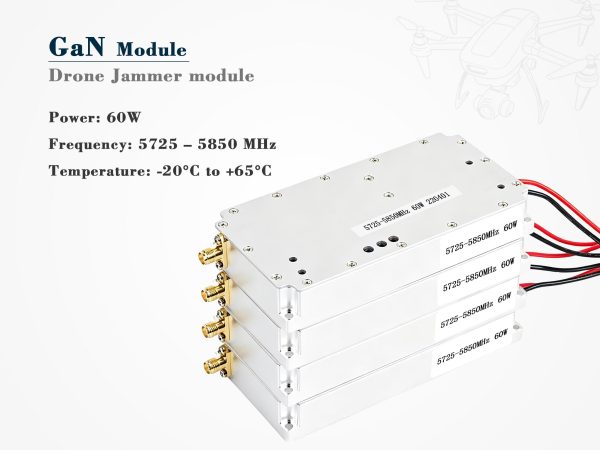
60W UAV Jammer Module – 5.8GHz GaN Analog Drone Jammer
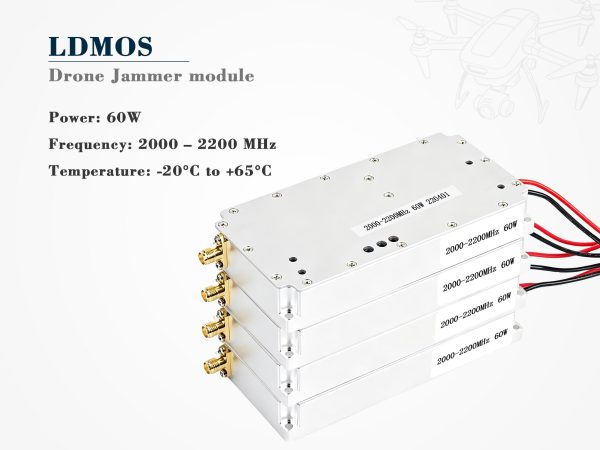
60W LDMOS Drone Jamming Module 2000-2200MHz