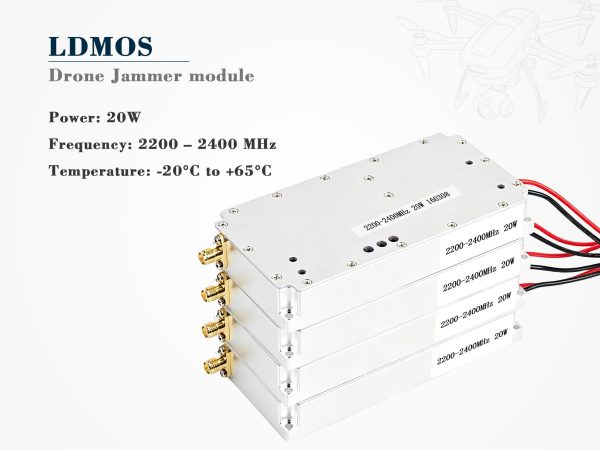
20W 5725–5850MHz Anti‑Drone Module with Sweep Source
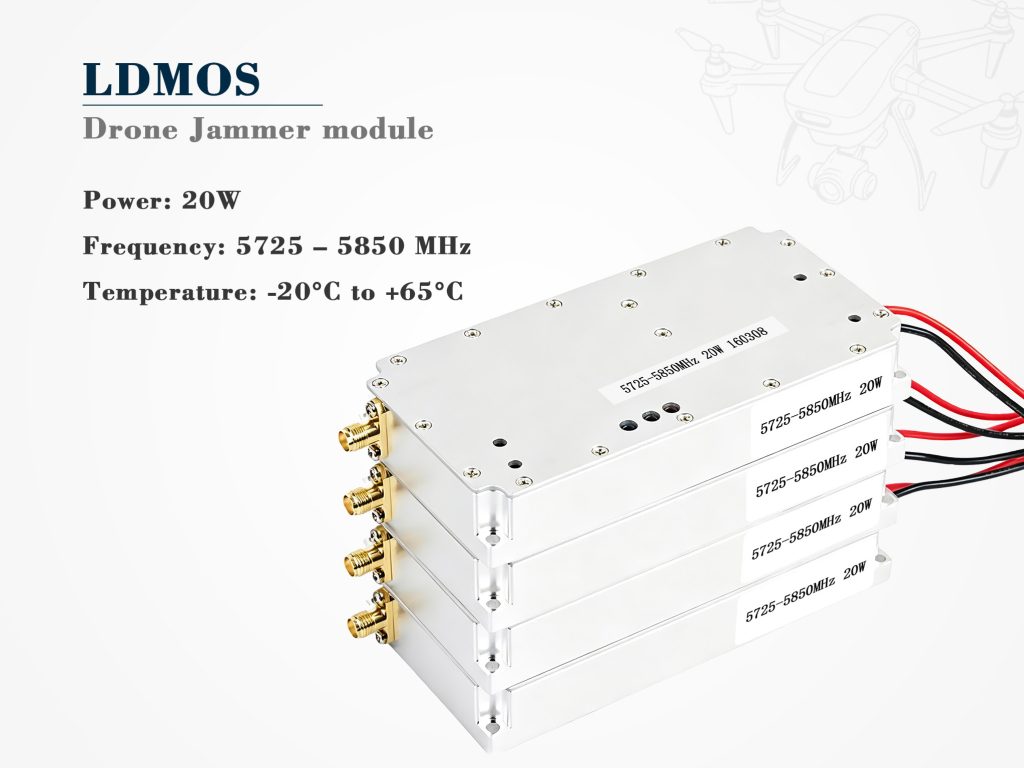
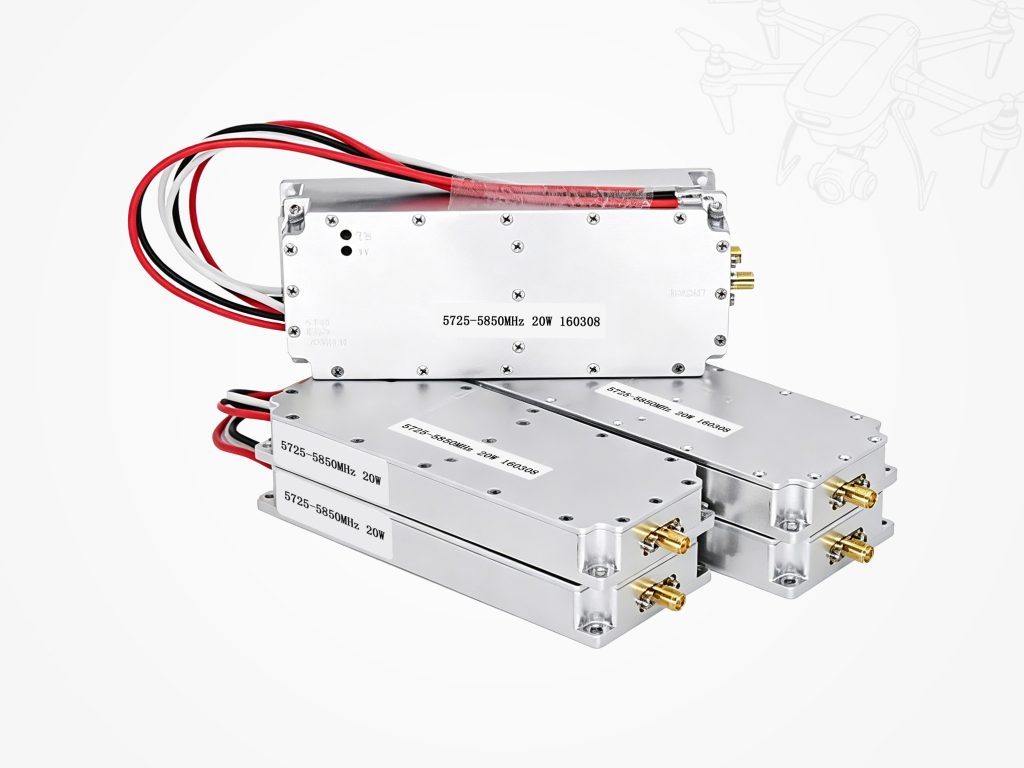
20W anti‑drone module for 5725–5850MHz with built‑in analog sweep. DC 24–29V, 2.5A, SMA out, compact 115×46×21mm. Ideal for counter‑UAS jamming systems.
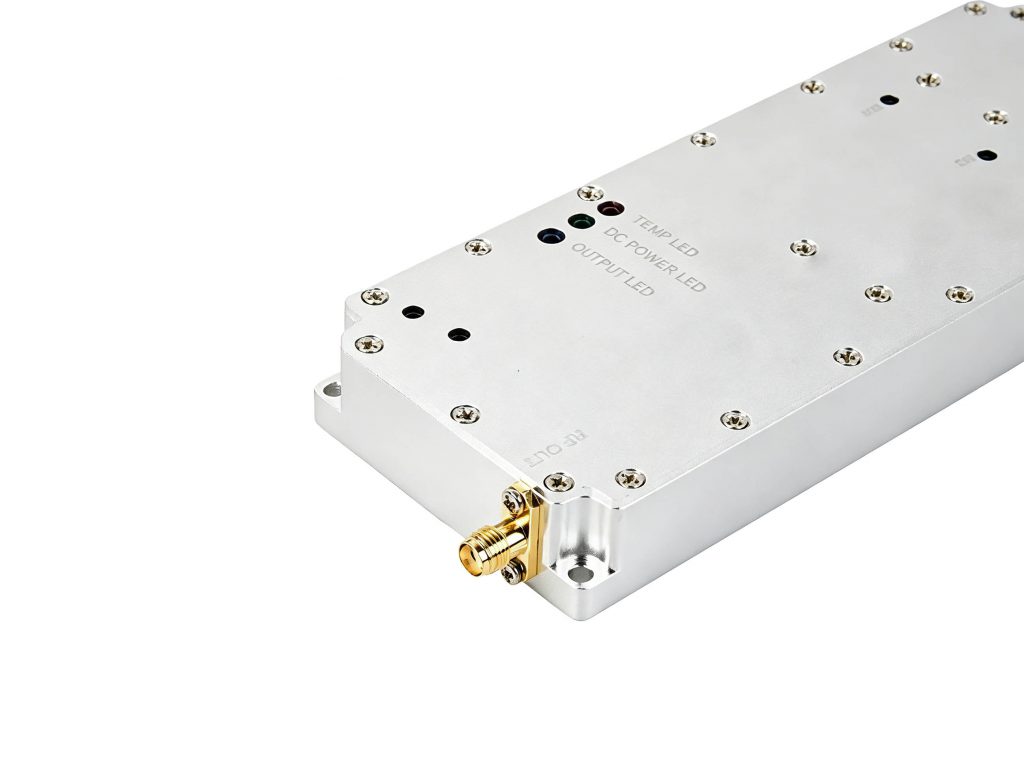
Technical Specifications
| Parameter | Specification | Notes |
| Frequency range | 5725 – 5850 MHz | Full ISM band coverage |
| Output power | 20W (typical) | Measured at 50Ω load, 26V supply |
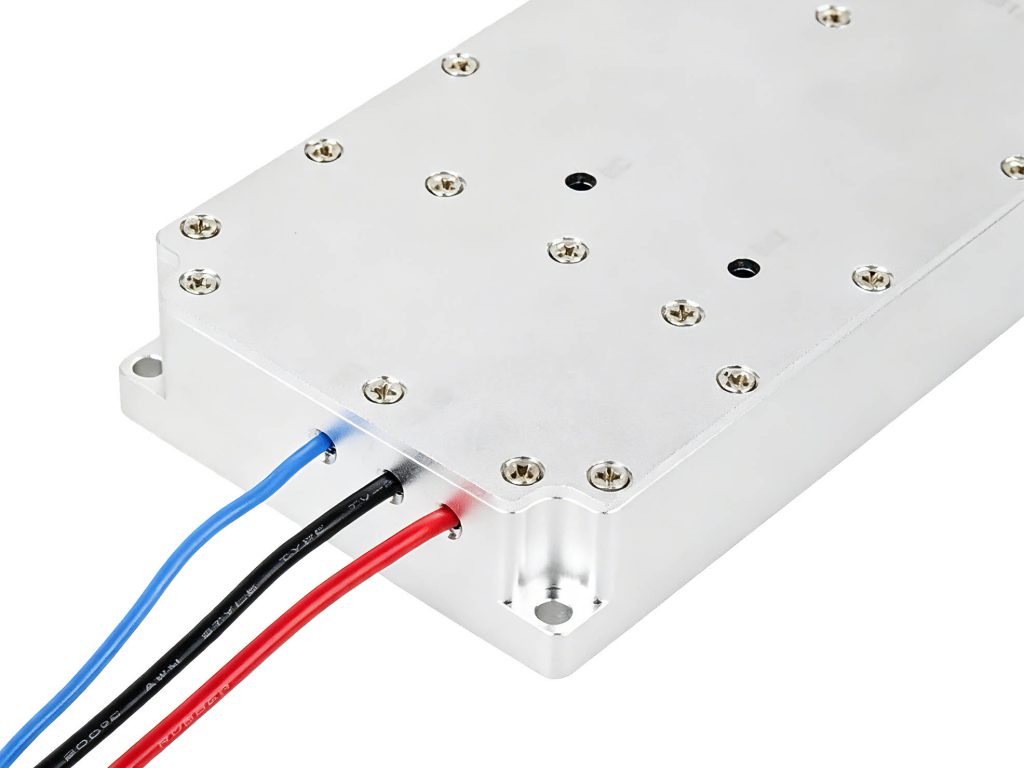
| Supply voltage | DC 24V – 29V | Nominal 26V recommended |
| Current draw | ≤ 2.5A | At maximum output power |
| Modulation source | Built‑in high‑speed analog sweep | VCO‑based, no external generator |
| Analog scan speed | > 50 MHz/ms | Covers band in < 3 ms |
| Input / output impedance | 50Ω (RF output) | Control input is high‑impedance TTL |
| Protection LEDs | Over‑temperature & over‑current (internal) | No external indicator pins – trips automatically |
| Operating temperature | -20°C to +65°C | Ambient, with adequate heatsinking |
| Dimensions (L×W×H) | 115.5 × 46.5 × 21 mm | Excluding connectors and mounting tabs |
| Weight | 0.21 kg | Approximately |
| Base material | Aluminium alloy (6061) | Provides thermal spread and structural strength |
Product Details
Why 5.8GHz Is a Prime Target for Drone Jamming
Walk into any drone racing event or check the specs of a modern consumer quadcopter, and you’ll see 5.8GHz everywhere. It’s the go‑to frequency for high‑definition video downlinks, often paired with a 2.4GHz control link. But as drone manufacturers push for better image quality and lower latency, more and more models are shifting their primary command and telemetry channels into the 5.7–5.85GHz range – especially the ones that use the ISM band for both video and control.
That makes the 5725–5850MHz band a critical slice of spectrum for any effective counter‑UAS system. If you can’t jam 5.8GHz, you’re leaving a huge hole in your defence. This module is built to close that gap – delivering a solid 20W of swept interference across the entire band, from 5725 to 5850MHz, with no external signal generator required.
Real Power, Real Efficiency
Twenty watts might sound like a lot, but what matters is how that power translates into effective jamming range. With a decent directional antenna (say, 12–15 dBi), this module can easily reach 300–600 metres against typical consumer drones, depending on terrain and atmospheric conditions. The built‑in high‑speed analog sweep source covers the band in milliseconds, so even frequency‑hopping or spread‑spectrum links get interrupted almost instantly.
The module draws about 2.5A at 26V DC, giving you roughly 65W of input power. With an efficiency of ≥40%, you get more than 20W of RF out – which is impressive for a linear amplifier in this frequency range. The remaining power turns into heat, so a decent heatsink is your friend. But the aluminium baseplate (6061 alloy) does a good job of spreading that thermal load, and the internal over‑temperature protection gives you a safety net if you push it too hard.
Drop‑In Integration for System Builders
We designed this module with integrators in mind. The control interface couldn’t be simpler – +5V or a floating pin turns it on; grounding it turns it off. You can drive it from a simple switch, a relay, or any standard 3.3V/5V logic output. No serial handshakes, no timing constraints – just a clean enable line.
The RF output is a standard SMA female connector, so you can attach any 50Ω antenna or external filter without scrambling for custom cables. The output VSWR is specified at ≤2.0, which means it tolerates slight mismatches – handy if you’re swapping between different antennas for different deployment scenarios.
Power supply is equally straightforward: 24–29V DC is a very common range, compatible with most industrial power bricks, 6‑cell LiPo packs, or automotive batteries. If you’re building a portable handheld jammer, you can easily run it from a battery with a suitable boost or buck converter.
Size, Weight, and Durability
At just 115.5 × 46.5 × 21mm and 0.21kg, this module fits into surprisingly tight enclosures. It’s shorter than a smartphone and weighs about as much as a deck of cards – which makes it ideal for backpack‑mounted systems, drone‑mounted counter‑UAS payloads (yes, anti‑drone drones are a thing), or fixed installations where space is at a premium.
The aluminium housing not only provides structural rigidity but also acts as a heat spreader. While the module is rated for continuous operation with proper heatsinking, it can also handle burst modes without additional cooling – for instance, 30 seconds on, 60 seconds off – which is typical in many security applications where you only need to engage a target briefly.
Who Needs This Anti-Drone Module?
If you’re a system integrator building jamming guns, vehicle‑based protection units, or fixed‑site denial systems, this module saves you months of RF development. Instead of wrestling with GaN matching networks, sweep linearity, and thermal management, you get a tested, production‑ready block that just works.
Security consultants and R&D labs also find these modules useful for testing drone vulnerabilities and developing countermeasures. But remember – operating jammers is heavily regulated in most countries. Always obtain the necessary licences and permissions before transmitting.
Thermal Management – A Practical Note
Let’s talk heat, because it’s the silent killer of RF amplifiers. Without any heatsink, you can run this module for about 10–15 seconds at full power before the internal protection kicks in. With a passive heatsink (say, a 100×100×30mm finned block), you can push it to a 50% duty cycle – 30 seconds on, 30 seconds off. Add a small fan, and you can run it continuously at 20W all day long. The over‑temperature and over‑current protection LEDs (internal) will shut down the module if things get too hot, but designing your cooling properly upfront avoids nuisance trips.
The Sweep Advantage
Some cheaper jammers use fixed‑frequency oscillators, which are useless against frequency‑hopping drones. This module’s built‑in analog VCO sweeps the entire 5725–5850MHz range at a speed faster than 50MHz per millisecond. That means any hop sequence is disrupted within a fraction of a sweep cycle – effectively denying the drone any stable link. It’s not a DDS‑based system, so you get low phase noise and clean spurious performance without the need for external programming.
Final Verdict
This 5.8GHz anti‑drone module gives you a proven, rugged, and easy‑to‑use RF core for your counter‑UAS projects. The combination of 20W power, integrated sweep, compact footprint, and simple control makes it a favourite among professional integrators who need reliable field performance. Whether you’re protecting an airfield, a stadium, or a critical infrastructure site, having this band covered is non‑negotiable – and this module delivers.
Frequently Asked Questions
Case Studies
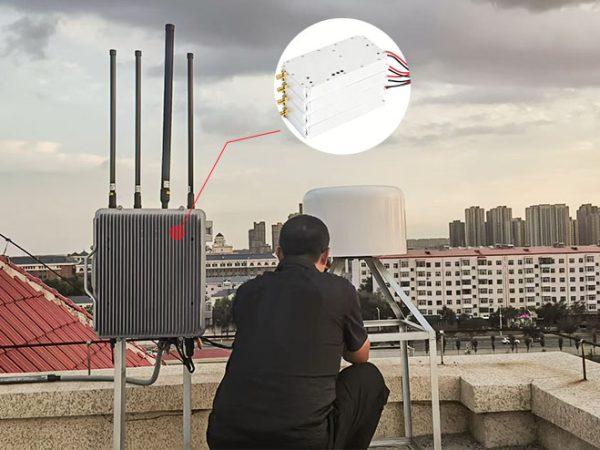
Heilongjiang Weather Center Completes Anti-Drone System Upgrade with Three High-Power Drone Jammer Modules

Tangshan Chem Plant Sealed Drone Gaps With 3 GaN Wideband Modules
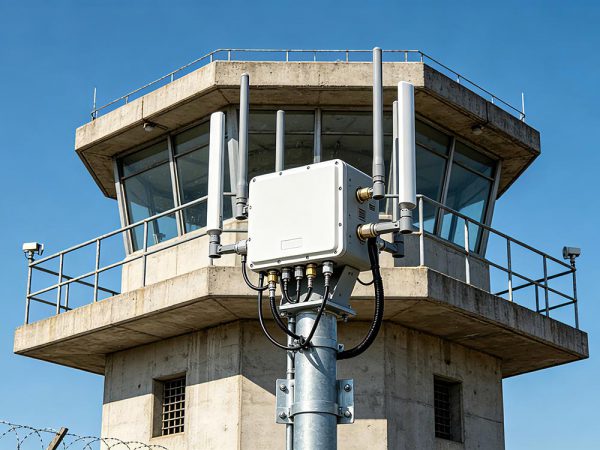
How a National Prison Integrated Our Drone Jamming Module Into Their Fixed Counter-Drone System

Integrating Core RF Power: OEM Drone Jamming Module for Oil Refinery Security | Case Study
Send Us a Message
Related Products
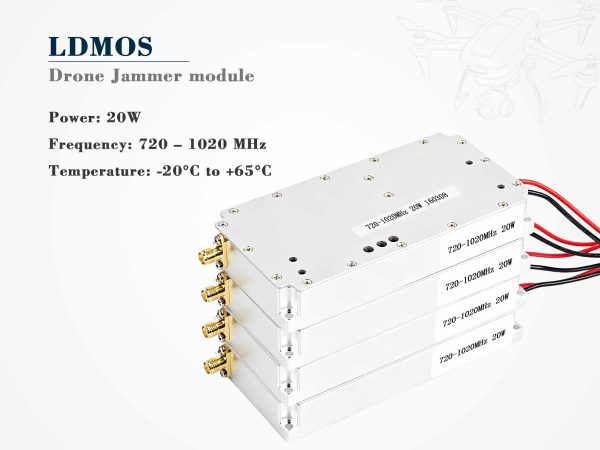
20W 720–1020MHz UAV Jammer Module | LDMOS Analog
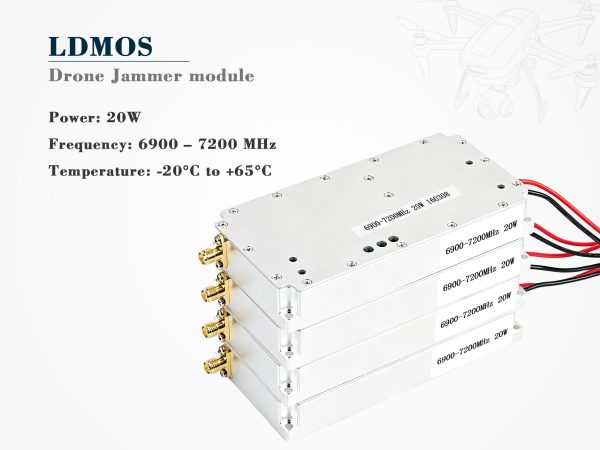
Powerful 20W LDMOS Drone Jammer Module for 6.9–7.2 GHz
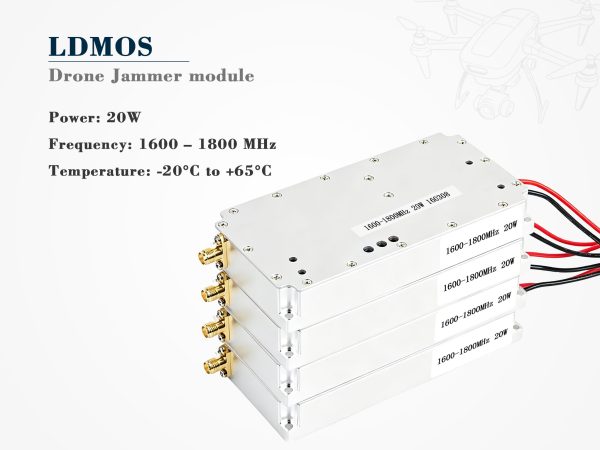
Powerful 20W Anti Drone Module 1600–1800MHz