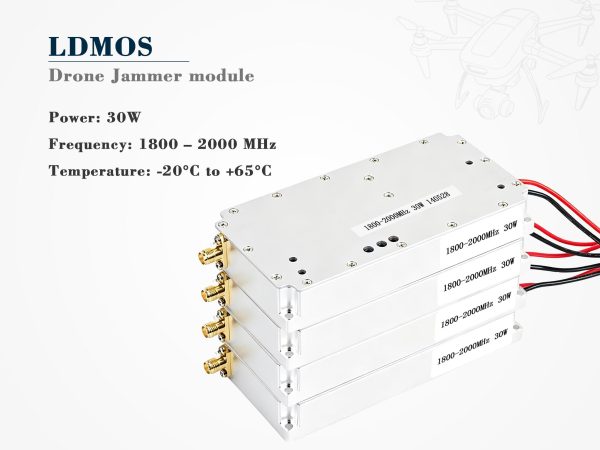
30W Anti-Drone Jamming Module: Compact 1000-1300MHz GaN Solution
30W anti-drone jamming module covering 1000-1300MHz with built-in high-speed sweep source, DC24V input, SMA output, and GaN efficiency. Weighs only 0.21kg.
Technical Specifications
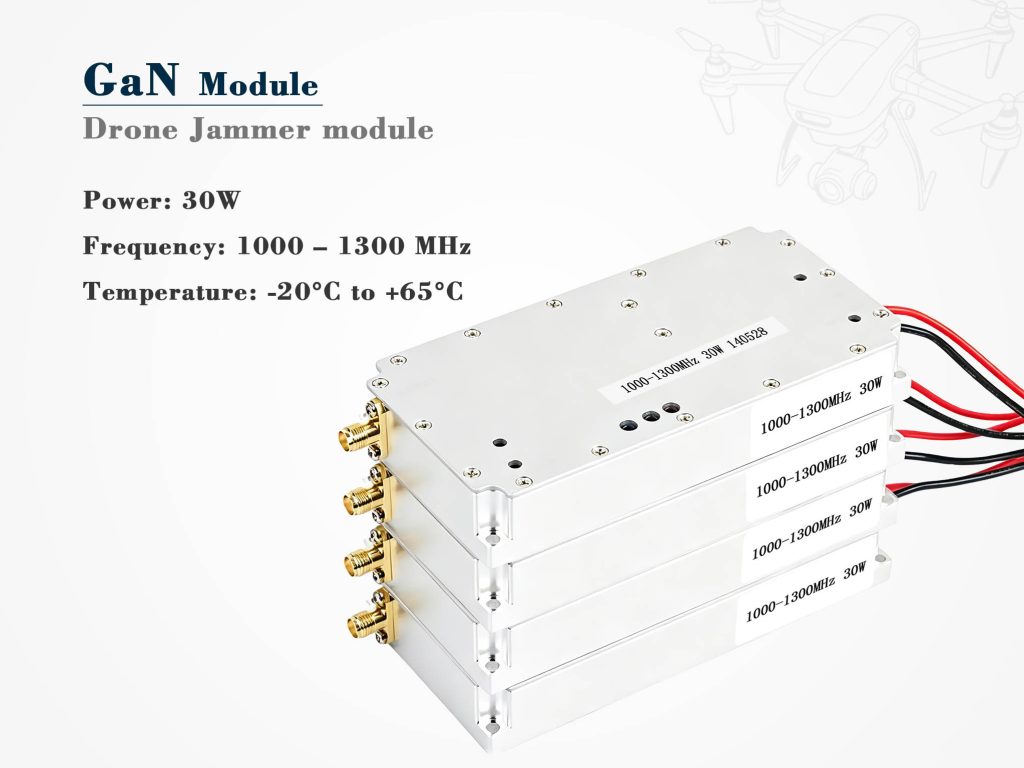
| Parameter | Specification | Notes |
| Frequency range | 1000~1300MHz | Covers common drone downlink and navigation bands |
| Output power | 30W | Stable across full band |
| Supply voltage | DC24V~29V | Nominal 28V recommended |
| Current draw | 3.2A max | At full output power |
| Modulation source | Built-in high-speed sweep source | Analog sweep, no external input required |
| Analog scan speed | High-speed, internally set | Optimized for frequency-hopping targets |
| Input / output impedance | 50Ω | SMA female output connector |
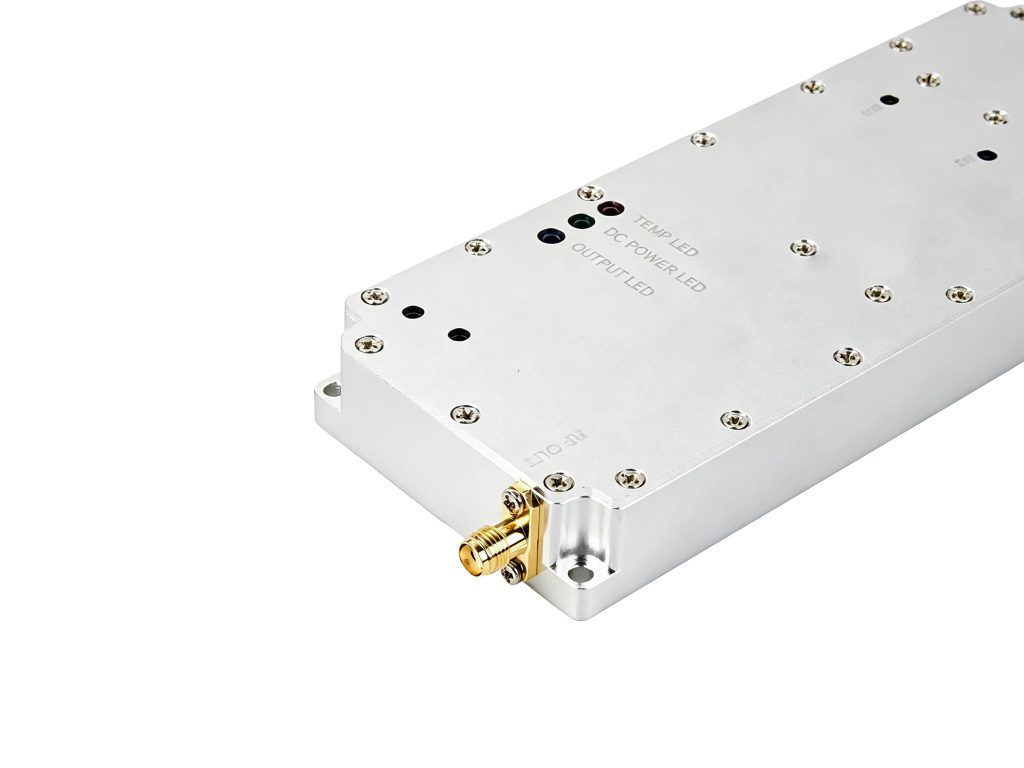
| Protection LEDs | Power switch, overvoltage, overtemperature | Three separate indicators |
| Operating temperature | -20~+65°C | Suitable for outdoor use |
| Dimensions (L×W×H) | 115.5×46.5×21mm | Compact for portable systems |
| Weight | 0.21kg | Lightweight for airborne or man-portable use |
| Base material | GaN on SiC | High thermal conductivity substrate |
Product Details
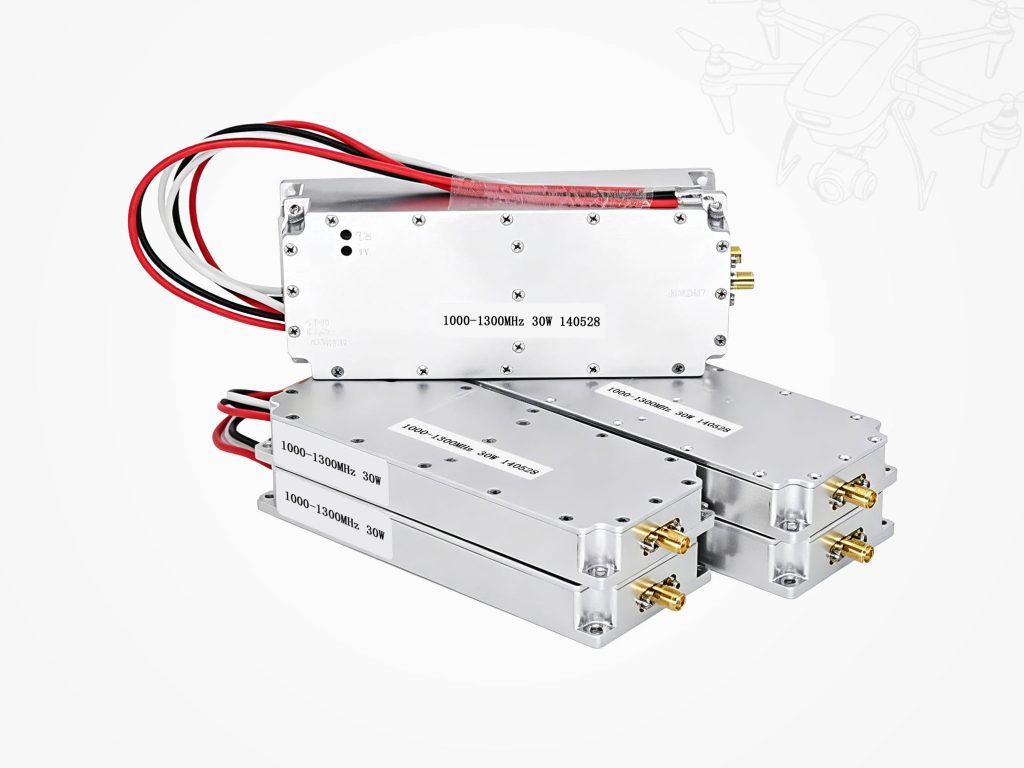
The 30W anti-drone jamming module is a compact, high-efficiency RF power amplifier and signal source designed specifically for counter-unmanned aircraft system applications. Operating across the 1000-1300MHz band, this module delivers clean, stable output while maintaining a form factor small enough for portable or vehicle-mounted deployment. The unit integrates a built-in high-speed sweep source, eliminating the need for external signal generation in most jamming architectures.
GaN Technology and Thermal Performance
Built on a gallium nitride (GaN) platform, this module achieves efficiency ratings of 40% or higher across the full operating band. The GaN substrate supports higher power density than traditional LDMOS designs, which directly translates to smaller heatsinking requirements and improved long-term reliability. Thermal management is handled through a combination of the baseplate design and active monitoring circuits. Three LED indicators provide real-time status for power enable, overvoltage conditions, and overtemperature events, allowing operators to quickly diagnose system faults without additional test equipment.
RF Performance and Signal Characteristics
The 30W anti-drone jamming module‘s RF chain begins with an internal high-speed analog sweep source capable of generating broadband interference patterns across the entire 1000-1300MHz range. This approach proves effective against frequency-hopping drones that attempt to evade fixed-frequency jammers. Output power remains stable at 30W across the band, with a maximum VSWR of 2.0 ensuring reliable operation even with slightly mismatched antenna loads. The output connector uses a standard SMA female interface, simplifying integration with existing antenna systems.
Electrical Integration and Control
Power requirements are straightforward: the module accepts DC input from 24V to 29V, drawing a maximum of 3.2A under full load. The TTL-compatible enable pin offers simple control logic. Applying +5V or leaving the pin floating activates the module, while grounding the pin shuts down RF output. This control scheme works well with microcontroller-based system controllers or manual toggle switches in field-deployable equipment.
Mechanical Design and Deployment Considerations
At just 115.5mm × 46.5mm × 21mm and weighing 0.21kg, the 30W anti-drone jamming module fits easily into compact enclosures or multi-module jamming arrays. The operating temperature range of -20°C to +65°C supports outdoor deployment in harsh environments. For system integrators building multi-band counter-UAS platforms, multiple modules can be combined to cover additional frequency bands such as 433MHz, 915MHz, 2.4GHz, and 5.8GHz. This modular approach allows for scalable jamming architectures tailored to specific threat profiles. For more context on drone threats and countermeasure approaches, refer to resources from the Federal Aviation Administration and academic research on RF countermeasure effectiveness.
Frequently Asked Questions
Case Studies
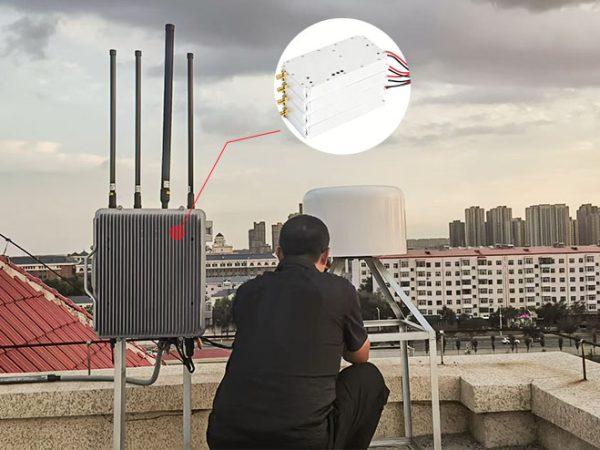
Heilongjiang Weather Center Completes Anti-Drone System Upgrade with Three High-Power Drone Jammer Modules

Tangshan Chem Plant Sealed Drone Gaps With 3 GaN Wideband Modules

How a National Prison Integrated Our Drone Jamming Module Into Their Fixed Counter-Drone System

Integrating Core RF Power: OEM Drone Jamming Module for Oil Refinery Security | Case Study
Send Us a Message
Related Products
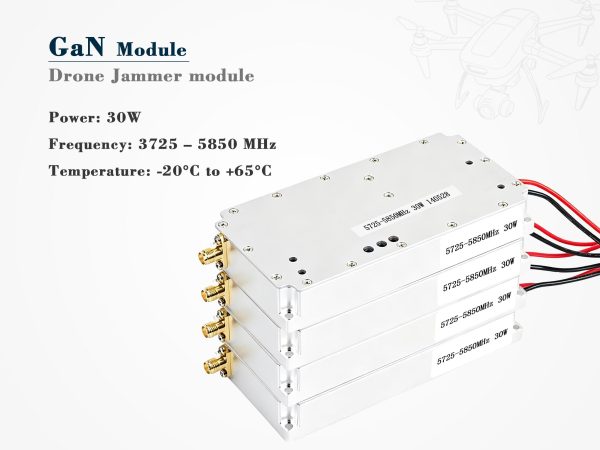
30W 5.8 GHz GaN Drone Jammer Module | 5725–5850 MHz
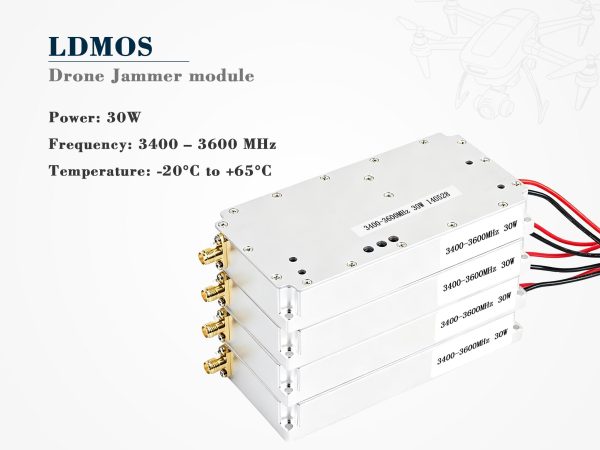
30W LDMOS Jamming Module for 3400–3600 MHz Drone Defense
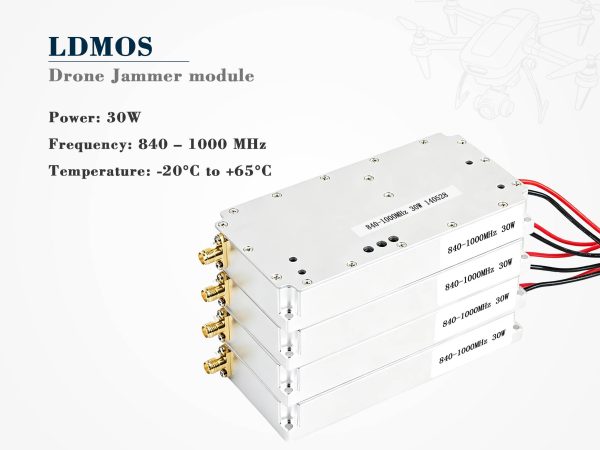
30W Anti UAV Module 840-1000MHz LDMOS Analog Jammer